7-OH Addiction Treatment
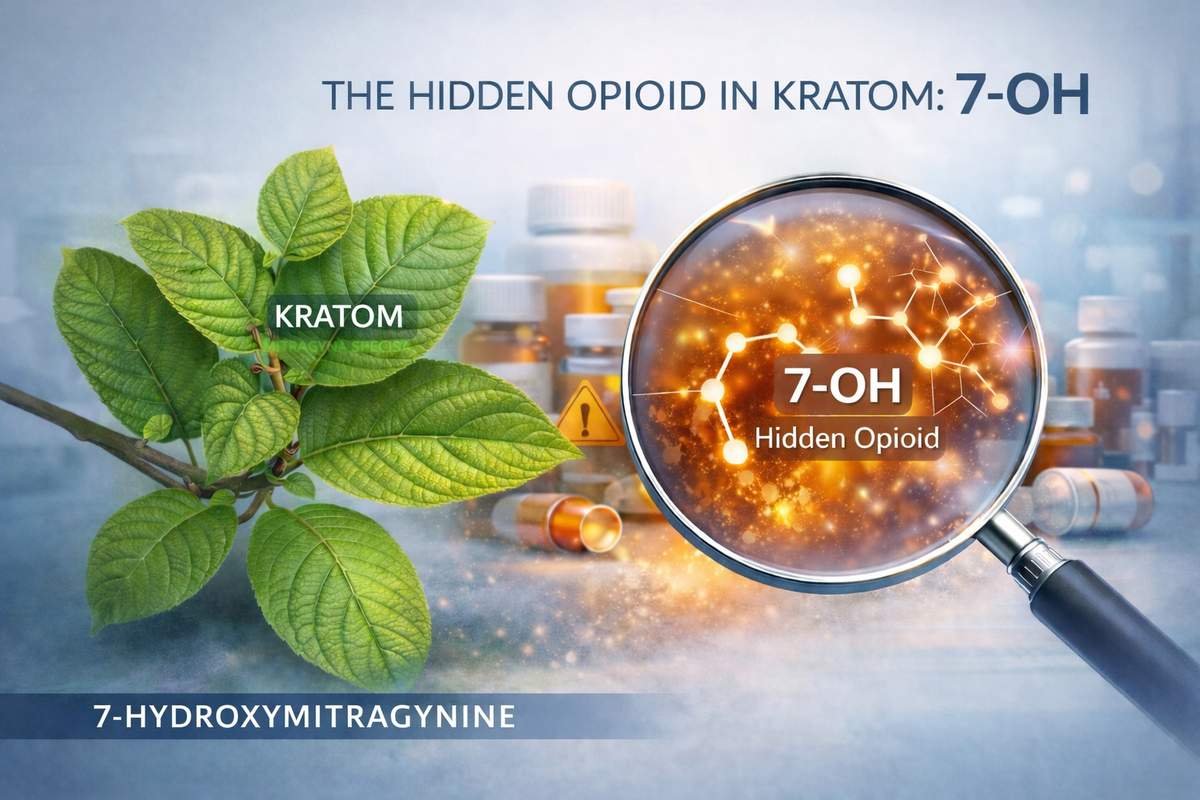
7-OH or 7-Hydroxymitragynine is quickly becoming a substance of major concern in the United States. The U.S. (FDA) Food and Drug Administration (2025b) views that 7-OH has the potential to start the next wave of the opioid crisis and that this concentrated product is an emerging public health threat. As of July 1, 2026 there is movement on making 7-OH and other Kratom derivatives like MGM-15, MGM-16, and Pseudo Schedule I substances. This legal movement is in process and more information is located on the 7-OH, MGM-15, and Kratom Law Changes page to learn more and stay up to date on these legal changes.
Luckily for many there are treatment options, especially if the person catches the addiction before too great a tolerance is built. Here at Recover Clarity, we work with those needing assistance with breaking the addiction to the “legal” 7-OH products. Click below to fill out a contact form and schedule a free consultation.
Learn More About 7-OH and MGM-15
Seeking treatment and learning about a substance are related, but they are not the same decision. Some people are ready to speak with a provider, while others are still trying to understand how 7-OH dependence develops, why withdrawal can become so difficult, how MGM-15 differs from 7-OH, and which recovery options may be available.
Recover Clarity’s 7-OH and MGM-15 educational course provides a guided, self-paced learning experience covering patterns of use, tolerance, withdrawal, triggers, cravings, treatment comparisons, reduction planning considerations, and recovery preparation. You can also visit the Recover Clarity Education Hub to explore this course and additional educational resources. These materials provide general education and do not replace an individualized medical evaluation.
7-OH in the Media
The rapid growth of concentrated 7-OH products has created new questions for patients, families, addiction professionals and regulators. Recover Clarity has been actively involved in education and public discussion surrounding these products as treatment providers begin seeing more individuals seeking help for dependence and withdrawal.
Founder Ben Culler has discussed 7-OH, concentrated kratom products and emerging opioid-active substances through both long-form podcast conversations and documentary media.
What is 7-OH?
7-Hydroxymitragynine, more commonly known as 7-OH, is one of the alkaloids that come from the plant Mitragyna speciosa (Kratom). This drug also has other street names called 7-Hydroxy, 7-OHMG and just plain ‘7’ (U.S. FDA, 2025c). As this is a naturally occurring alkaloid in Kratom it is only about 2% of the total alkaloids in the plant (U.S. FDA, 2025a).
To learn more about the science and history of Kratom and the other derivatives such as 7-OH and the newer MGM-15, read the blogs on this site’s page. MGM-15 is a new synthetic derivative of Kratom and is of major concern, which could likely leapfrog over any legislation looking to ban 7-OH or even Kratom (mitragynine). There are other blogs explaining about Kratom and How It Works as well as one more specifically on 7-OH and Kratom and if they are really safe.
Dangers of 7-OH Concentrates
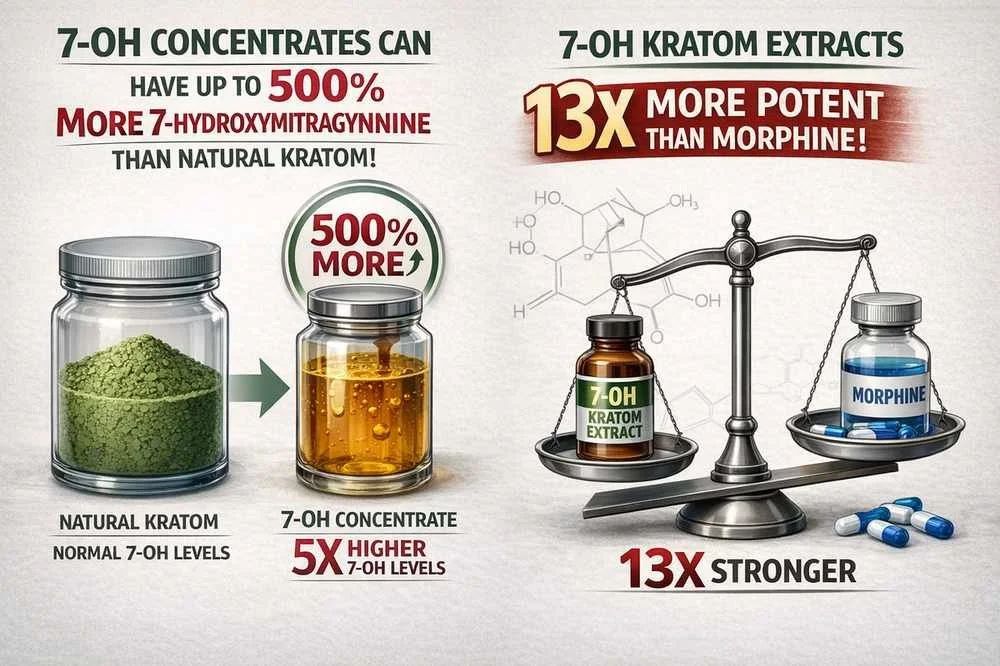
Many of the products found online or even at vape stores and gas stations contain semi-synthetic or synthetically enhanced amounts of 7-OH that would not be naturally occurring in Kratom. These can contain as much as 500% more 7-Hydroxymitragynine then what would naturally occur (U.S. FDA, 2025c).
What is most concerning is the Kratom 7-OH concentrated extracts are 13 times more potent than morphine (U.S. FDA, 2025c). With this potency comes extreme concerns of misuse and physical dependency which can lead to intense withdrawal symptoms once a physiological dependency occurs.
7-OH Withdrawal
Because of the difference and effectiveness of concentrated 7-OH to the mu-opioid receptor sites, the withdrawal effects can be much stronger than that of natural Kratom. The same withdrawal symptoms of that with all other opioids can be present including but not limited to:
Vomiting
Diarrhea
Heaving Sweating
Aches and pains
Insomnia
Elevated heart rate
Chills and Fever
Restlessness
Anxiety
Depression
Changes in Mood
Some patients have reported that higher daily dosage levels of 7-OH, 500mg to 1,000mg a day of this product result in worse withdrawals than that of pain pills and even heroin.
The Hidden Addiction Factor
Many individuals that are suffering from addiction to 7-OH or even Kratom, were not aware of what they were consuming. This brings up a different concern when looking at treatment for this addiction. Unlike that of heroin or other illicit substances, when people try those, they are aware that addiction is a complete possibility. But these products have not been educated correctly, legally sold in many stores and online, and often marketed as “all-natural” products.
Some individuals were on Kratom and handed free samples of 7-OH at the store they were purchasing Kratom. This was done to bring in new customers to that market and get them “hooked” on a stronger product. Which in only days can lead to physical dependency. Not fully knowing what they were taking at the time, led to this “hidden addiction” they are now suffering from.
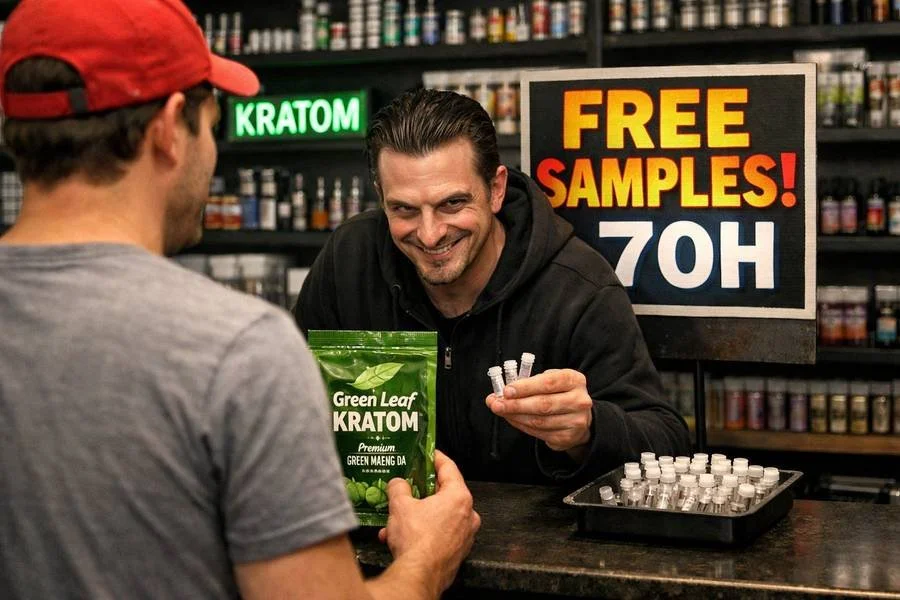
New Therapy Approaches for Hidden Addiction
Because of many becoming addicted to “legal” substances, this causes for a need for different therapeutic approaches. And why 7-OH Treatment is Unique for many needing this type of treatment. Therapy will assist people with their new concerns of ending up in opioid use disorder treatment, when they originally had no intention or desire of using opioids. Some individuals used 7-OH, or Kratom and now MGM-15, as an opioid either to assist with ailments or for recreational purposes, but many also did not start this way.
Due to this complexity of how this addiction can start, requires special therapy interventions, which we have created and are using here at Recover Clarity. Assistance is here and help is just a call away.
7-OH Hidden in Kratom Products
There are many products listed as “all-natural Kratom” which are not as they appear. This is due to the regulatory framework around this substance, allowing for no standardization and quality assurance of the substance. Companies have started increasing the 7-OH content of their Kratom products to enhance the effects of the product as well as causing them to be more addictive.
This also goes for MGM-15 which is appearing in other products. From a search of online suppliers of these substances, you can at times (if they are truly reporting what is contained in the product), see that some Kratom products will include enhanced levels of both 7-OH and MGM-15, and even with enhanced levels of mitragynine (often referred to as MIT).
How 7-OH Affects the Brain
7-OH, binds to the same receptors in the brain as that of any other opioid such as Fentanyl, Heroin, Morphine, Hydrocodone and all other opioids and opiates. These receptors, the mu-opioid receptors (MORs) are located in the central nervous system. When these substances bind to the receptors, they activate the receptors which is what leads to increased dopamine (where the pleasure and euphoria come from), reduced pain signals, decreased gastrointestinal movement, and slowed breathing. 7-OH, also binds to other opioid receptors in the brain, but it is the mu-opioid receptors that are of main concern.
As there are the physiological effects of 7-OH there are psychological changes as well. These are changes to the reward pathways which lead to psychological dependence on the substance. Psychological aspects of addiction at times can often be longer lasting than the physiological aspects such as withdrawal. And these can play into psychosomatic responses during recovery from addiction to 7-OH and/or Kratom.
Difference Between Kratom and 7-OH
This is when looking at many “legal” products being sold the 7-OH is semi-synthetically produced in greater than naturally occurring amounts. Between Mitragynine and 7-OH, it is the 7-OH which binds very closely to the mu-opioid receptor sites as well as other opioid receptor sites (Obeng et al., 2021). As both alkaloids will bind to the mu-opioid receptor sites, it is 7-OH that can have 10 to 40 times more effect on these receptors than mitragynine.
This is a vast difference between the two substances, especially making 7-OH concentrates dangerous for abuse with including physiological and psychological dependence.
So where is the difference?
This is when looking at many “legal” products being sold the 7-OH is semi-synthetically produced in greater than naturally occurring amounts. Between Mitragynine and 7-OH, it is the 7-OH which binds very closely to the mu-opioid receptor sites as well as other opioid receptor sites (Obeng et al., 2021). As both alkaloids will bind to the mu-opioid receptor sites, it is 7-OH that can have 10 to 40 times more effect on these receptors than mitragynine.
This is a vast difference between the two substances, especially making 7-OH concentrates dangerous for abuse with including physiological and psychological dependence.
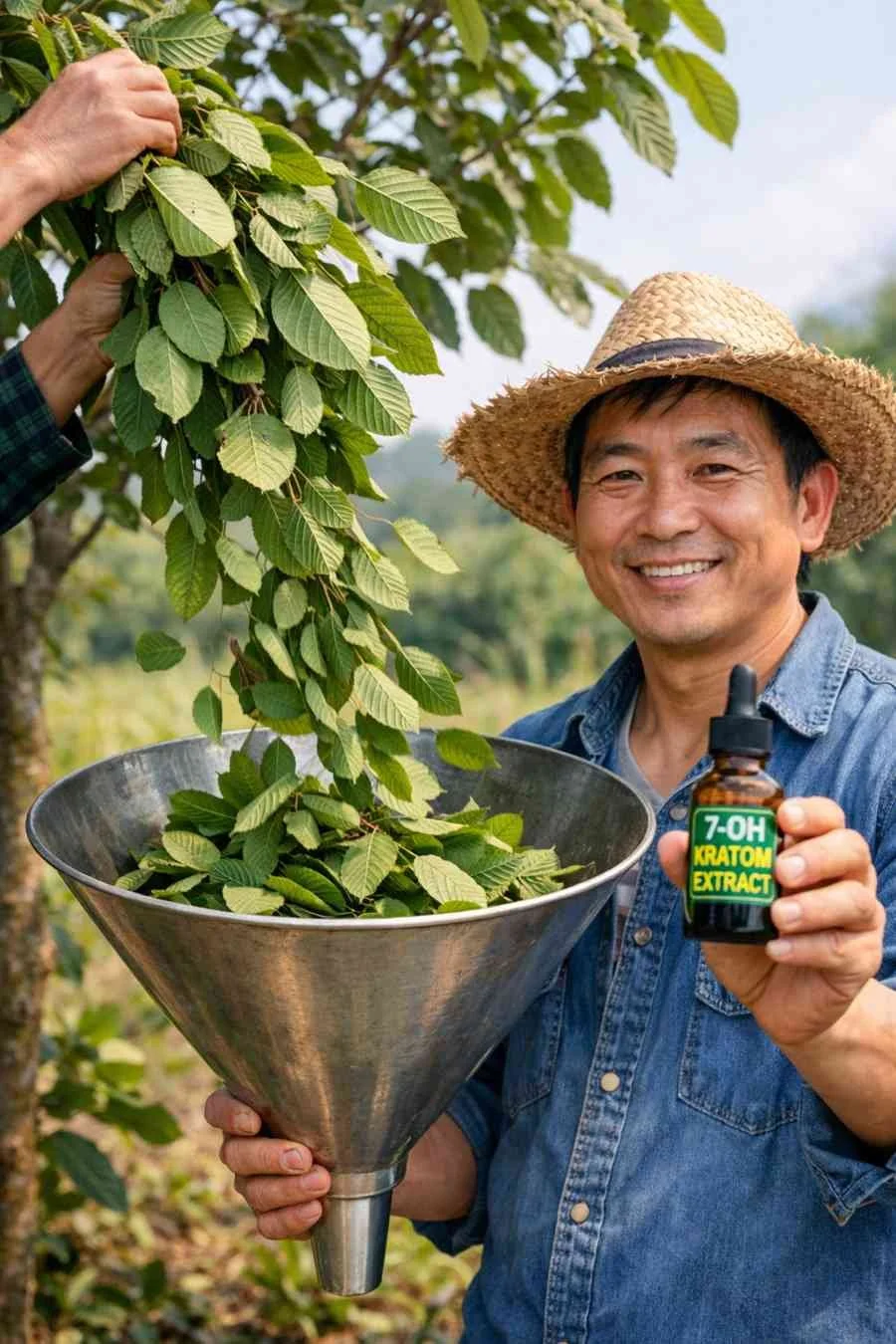
How is 7-OH NOT Natural?
If 7-OH, is a naturally occurring alkaloid in the Kratom plant, how are the versions being sold to consumers not a naturally occurring substance? The answer lies in the cost of manufacturing. Most Kratom leaves at most will contain under 2% of the total alkaloids being 7-OH. Therefore, extracting this naturally is not cost efficient for the makers of this product. This would take many grams of natural leaf to extract these high doses of 7-OH.
What these manufacturers do is extract the mitragynine from Kratom and through an oxidation process make 7-OH or 7-hydroxymitragynine. That is why this is a semi-synthetic product and not “all-natural” as they report the product to be. From here is where another single step chemistry change can make the even more potent MGM-15.
New Emerging Threat of MGM-15
Dihydro-7-hydroxymitragynine of MGM-15 a newly emerging opioid threat for those already suffering from 7-OH addiction. In states with recent bans on 7-OH in 2026, MGM-15 quickly hit the shelves as a replacement as the laws were not broad enough to stop this substance from hitting the consumer market.
So how is this a new emerging threat?
MGM-15, which is also labeled as DHM-15, is 3.5 times the strength of 7-OH, and can be as potent as 50 times the strength of morphine (Matsumoto et al., 2014). When compared to Fentanyl, which is often listed as having a strength 50 to 100 times that of morphine. This is not making a direct comparison, just what the research shows.
How is MGM-15 related to 7-OH?
The name should explain a lot, MGM-15 has the same name as 7-OH, which is 7-hydroxymitragynine, just with “dihydro” added to the front. Showing this is a small but also significant change to this alkaloid. The process is called hydrogenation.
The marketing of these products like to be related to the “parent molecule” of mitragynine, but there are differences, making these semi-synthetic to fully synthetic substances. Which comes with greater concerns for addiction, tolerance, withdrawal, and potential for overdose.
Treatment Options for 7-OH Addiction

For people that have been taking concentrated 7-OH versions of Kratom, or the new MGM-15, more medical intervention may be required than that of normal Kratom Addiction Treatment. Ideally anyone would be able to just self-taper off the substance and become free of the grasp this plant takes on people. Before trying to taper please consult a medical provider and receive guidance.
The type of treatment option that will be best for a person is very individualized and based on many factors. For individuals that have a history of substance use disorders, treatment such as Medications for Opioid Use Disorder (MOUD) or also known as Medication Assisted Treatment (MAT) which includes medication of Suboxone (Buprenorphine) may be best fit. Medical detox may be needed to assist during the initial withdrawal management followed by treatment such as Online Suboxone Treatment or by adding in some Addiction Counseling.
Medical Detox
Medical detox could be useful for those suffering from extreme levels of withdrawal. This often is followed by outpatient treatment, whether with medications such as Suboxone, or just with additional therapeutic support. As medical detoxes may not sound as appealing as it requires in-person treatment, this level is of the highest care and always a good choice for those concerned about their journey of recovery. When looking at any journey of recovery having a higher level of care is never a bad idea. Also, those without prior history of addiction, medical detox could assist them with alleviating some withdrawal effects without other partial opioid agonist medications, allowing them to quickly get back to a life free of any substances.
Buprenorphine-Based Medications – Suboxone
Any of the Medications for Opioid Use Disorder (MOUD) could be used to assist with the withdrawal from 7-OH, MGM-15, or even Kratom. But it is important to understand the differences between the medications, seek medical opinions, and choose the one that is correct for you. For instance, there are great differences between Methadone vs Suboxone, such as Methadone is a long lasting full opioid agonist and Schedule II controlled substance, compared to that of the Schedule III Suboxone that is a partial opioid agonist. As well as differences between Sublocade and Suboxone, even though they are both Buprenorphine based medications. Recover Clarity uses sublingual Buprenorphine medications (Suboxone and Subutex) as these have been seen to have the highest success rates for addiction recovery. However, any medication that helps someone break free from addiction and get their life back is always a great thing.
Many medical research institutions do suggest that Suboxone or Buprenorphine based medications would be most recommended for the treatment of Kratom and 7-OH Addictions (John Hopkins Medicine, 2025; Mayo Foundation for Medical Education and Research, 2024). With the new presence of MGM-15, likely medical institutes will also follow similar recommendations for Buprenorphine for the treatment of MGM-15 addiction.
Again, if a person can get off 7-OH without the use of medications that is always the ideal solution. But for anyone with a history of substance misuse, medications can help with not only withdrawal but with future cravings and prevent relapses.
If you or a loved one is in need of treatment, contact us today by clicking below to schedule a free consultation.
7-OH in Pennsylvania and West Virginia
7-OH, is a problem in both Pennsylvania and West Virginia, as well as these states having some of the higher numbers of opioid use disorder patients. The Appalachian region was most severely affected by the start of the opioid crises. And this affects people in both rural and urban areas whether it is cities such as Pittsburgh or Wheeling to the more rural parts of the states.
Both states as of early 2026 have proposed legislation to ban 7-OH and possibly Kratom in general. West Virginia has current laws protecting those under the age of 21 from purchasing such products and expected 7-OH concentrates and synthetics to soon follow. When these go into effect, it could leave many experiencing withdrawal with no alternatives to legally buy, and why Suboxone Clinics in West Virginia need to be not only present, but prepared to help those in need.
At the current time the legislation in Pennsylvania does not even have an age limit on the purchasing of any Kratom or Kratom related products. But laws are likely going to change quickly. This is why having treatment options such as Pennsylvania Suboxone Clinics is of high importance for the state.
Frequently Asked Questions About 7-OH Addiction and Treatment
-
7-OH, is a naturally occurring alkaloid found in Kratom, but only in very small amounts (at most 2% of the total alkaloids). Many commercial products contain concentrated and semi-synthetic versions, making them far more potent and addictive than natural Kratom.
-
Yes. 7-OH, can be highly addictive because it binds strongly to mu-opioid receptors, similar to traditional opioids. This can lead to rapid tolerance, physical dependence, and withdrawal symptoms.
-
Some research and regulatory data suggest that concentrated 7-OH can be significantly more potent than morphine, increasing the risk of misuse, dependence, and severe withdrawal effects.
-
Withdrawal symptoms can resemble opioid withdrawal and may include:
• Nausea, vomiting, and diarrhea
• Sweating and chills
• Muscle aches and pain
• Anxiety and depression
• Insomnia and restlessness
• Increased heart rate
Severity often depends on dosage and duration of use.
-
Yes. Many people become addicted to 7-OH unknowingly because products are often marketed as “natural” or “legal” alternatives, and may be given as free samples or mixed into kratom products.
-
MGM-15 (dihydro-7-hydroxymitragynine) is a more potent, chemically modified version of 7-OH. It is considered an emerging threat due to its increased strength and abuse potential.
-
What treatment options are available for 7-OH addiction?
Treatment options include:
• Medication-Assisted Treatment (MAT) using buprenorphine (Suboxone)
• Medical detox for severe withdrawal cases
• Telehealth addiction treatment programs
• Counseling and behavioral therapy
Treatment plans are individualized based on severity and patient history.
-
In many cases, yes. Telehealth programs like Recover Clarity allow patients to receive telehealth treatment with the assistance of Online Suboxone Doctors and counseling, making recovery more accessible and private.
-
While some individuals can taper off without medication, many benefit from medical support, especially those with moderate to severe dependence or prior substance use history.
-
You should seek help if you notice:
• Increasing dosage or tolerance
• Withdrawal symptoms when stopping
• Difficulty controlling use
• Negative impact on work, relationships, or health
Early treatment leads to better long-term outcomes.
References
John Hopkins Medicine. (2025, February). Emerging use of kratom in US: Kratom use disorder experts propose decision-making algorithm for clinicians. Johns Hopkins Medicine.
Matsumoto, K., Horie, S., Takayama, H., Ishikawa, H., Aimi, N., Ponglux, D., & Watanabe, K. (2014). Antinociceptive effect of 7-hydroxymitragynine and its synthetic analogs in mice: Discovery of opioid agonists with μ/δ receptor activity. Journal of Pharmacology and Experimental Therapeutics, 348(3), 383–395.
Mayo Foundation for Medical Education and Research. (2024, June 18). Kratom: Unsafe and ineffective. Mayo Clinic.
Obeng S, Wilkerson JL, León F, Reeves ME, Restrepo LF, Gamez-Jimenez LR, Patel A, Pennington AE, Taylor VA, Ho NP, Braun T, Fortner JD, Crowley ML, Williamson MR, Pallares VLC, Mottinelli M, Lopera-Londoño C, McCurdy CR, McMahon LR, Hiranita T. (2021). Pharmacological Comparison of Mitragynine and 7-Hydroxymitragynine: In Vitro Affinity and Efficacy for μ-Opioid Receptor and Opioid-Like Behavioral Effects in Rats. J Pharmacol Exp Ther. 2021 Mar;376(3):410-427.
U.S. Food and Drug Administration. (2025a, July 29). 7-hydroxymitragynine (7-OH): An assessment of the scientific data and toxicological concerns around an emerging opioid threat [PDF]. https://www.fda.gov/files/drugs/published/7-hydroxymitragynin_7-oh_an_assessment_of_the_scientific_data_and_toxicological_concerns_around_an_emerging_opioid_threat.pdf
U.S. Food and Drug Administration. (2025b). Hiding in plain sight: 7-oh products. https://www.fda.gov/news-events/public-health-focus/hiding-plain-sight-7-oh-products
U.S. Food and Drug Administration. (2025c). Preventing the next wave of the opioid epidemic: What you need to know about. https://www.fda.gov/media/187900/download