

7-OH, MGM-15, and Kratom Law Changes: Why Product Confusion Matters
Why This Page Is Different From a 7-OH Addiction Treatment Page
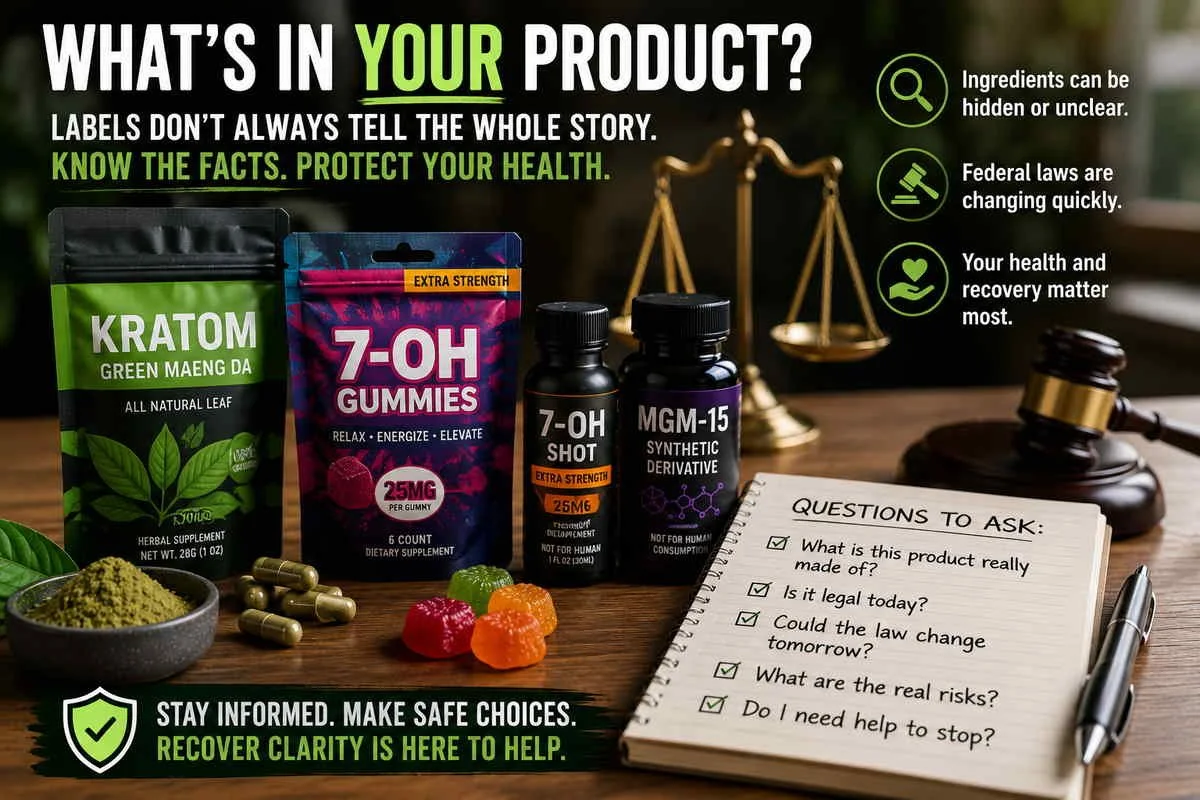
The goal here is to explain why 7-OH, MGM-15, synthetic kratom-related products, and traditional kratom leaf products are often discussed together but should not be treated as identical. A person may walk into a smoke shop, gas station, convenience store, or online shop and buy something marketed with familiar kratom language, such as “all-natural” or similar wording. But the product may contain concentrated 7-hydroxymitragynine (7-OH), synthetically created 7-OH, synthetic derivatives, or other compounds that are very different from traditional kratom leaf.
That confusion matters legally, clinically, and practically. It matters for families trying to understand what a loved one is taking. It matters for people in recovery who may believe they are using a legal supplement rather than an opioid-active product. It matters for clinicians asking intake questions. It matters for first responders trying to understand what someone may have used. And it matters because federal and state laws are changing quickly.
If you or a loved one need help with 7-OH Addiction Treatment, please contact us for a free consultation.
Clinical Experiences with Kratom Products Has Changed
Patients coming to Recover Clarity for treatment because of 7-OH, MGM-15, and concentrated Kratom products, like MIT-45 have been increasing over the past year with great increase in the past six months. As clinicians we notice these trends and hear the stories firsthand which is where concern really sets in.
What we have seen is how many people believed they were taking something safe, natural, and even lower doses than what they believed they were consuming. The associated withdrawal reported for the doses of some patients indicates that the products they were consuming had either increased amounts than what was reported on the product or contained other synthetic derivates such as MGM-15. Research clearly shows this has happened with some manufacturers and looking at their online reports, which are often hard to find, you can at times see elevated rates from what is printed on the packaging.
Many patients coming to treatment for 7-OH, MGM-15, and Kratom had no prior history of addiction or substance misuse. And for those that did have prior addiction problems, especially those with prior Opioid Use Disorder but had sustained sobriety, these products caused a full relapse. At times this led these patients back to opioids such as heroin and fentanyl because it was cheaper than the Kratom based products.
The Main Problem: “Kratom” Is Being Used Too Broadly
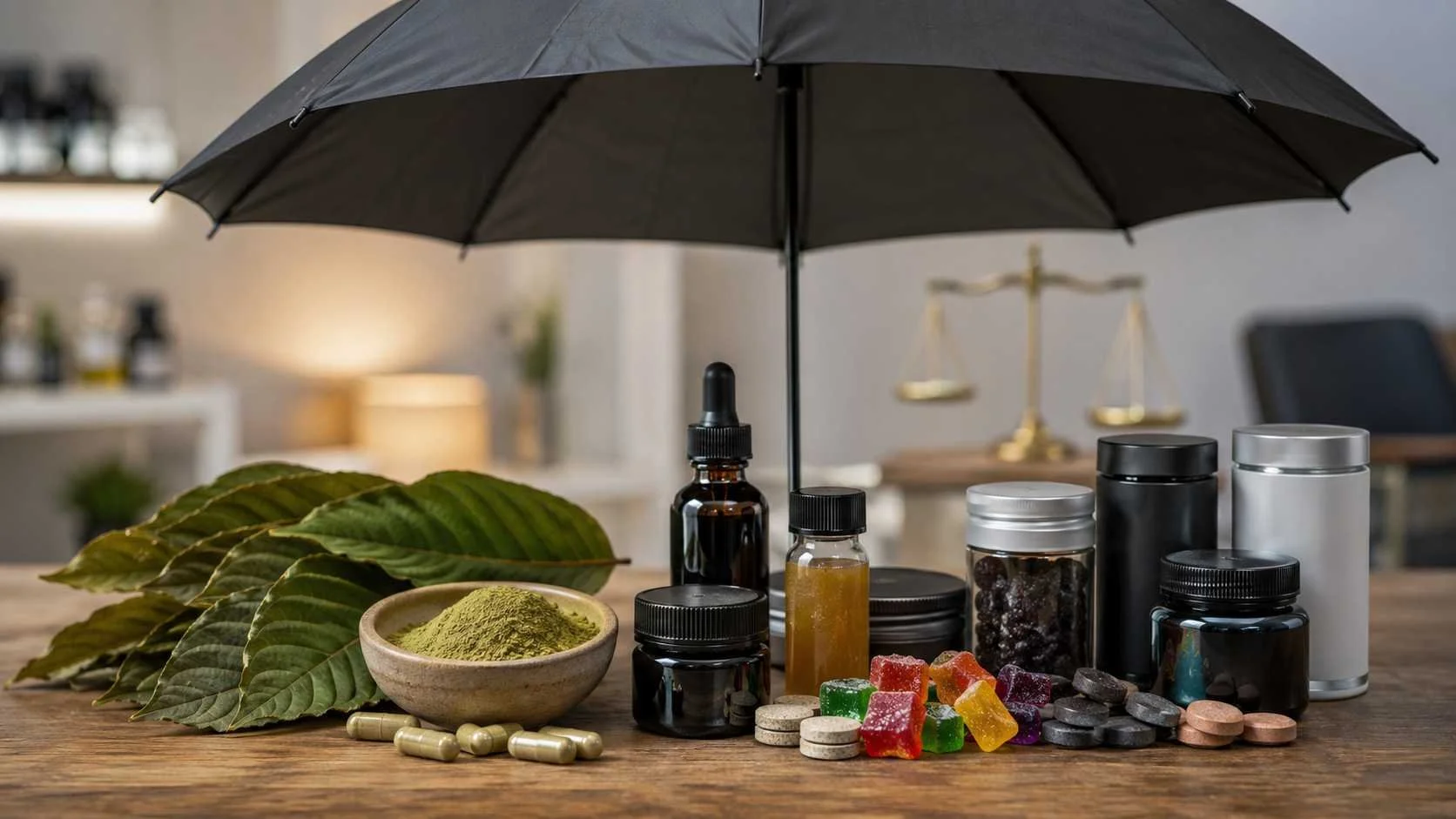
One of the biggest problems in public discussion is that the word “kratom” is often used as if it describes one single product. It does not.
Traditional kratom leaf, kratom powder, kratom capsules, kratom extracts, enhanced 7-OH products, gummies, tablets, drink shots, and synthetic derivatives may all be discussed under the same general umbrella. But they can differ significantly in concentration, effect, risk, labeling, and legal status.
The FDA has stated that 7-OH occurs naturally in trace amounts in the kratom plant, but its warning is directed at products containing 7-OH as an added ingredient or at enhanced levels (FDA, 2025a). This distinction is important because the concern is not simply that kratom contains naturally occurring alkaloids. The concern is that some newer products contain much higher concentrations of 7-OH than what would normally be expected from traditional kratom leaf. And the 7-OH concentrates are not natural they are semi-synthetic.
On July 1, 2026, the DEA announced that it had filed two Notices of Intent related to 7-OH and related substances. One notice addresses 7-OH above a specified threshold. A second notice addresses related substances, including mitragynine pseudoindoxyl “Pseudo” or “MGPI”, MGM-15, and MGM-16 (DEA, 2026). HHS and FDA also described MGM-15 as dihydro-7-hydroxymitragynine, a synthetic 7-OH derivative (HHS, 2026). These are the substances with recent concern, and this does not include natural Kratom or the naturally occurring 7-OH alkaloid in leaf Kratom.
That means people should be careful when using simple phrases like “kratom ban,” “7-OH ban,” or “synthetic kratom.” The legal and clinical details matter. Even though Kratom is not being targeted, and at Recover Clarity we see very few leaf Kratom patients, we still help with Kratom Addiction Treatment.
Why Labeling Can Mislead People
A product may be sold in a way that makes it look like a wellness product, supplement, energy product, or legal alternative to alcohol or other substances. Some products may be sold as gummies, tablets, drink shots, or powders and often in attractive packaging. FDA warning materials specifically describe 7-OH products being sold online and in smoke shops, gas stations, and convenience stores (FDA, 2025a).
This creates a practical problem: people often make decisions based on where a product is sold, how it is packaged, and whether it is openly available. If something is sitting on a store shelf, many consumers assume it must be reasonably safe, regulated, or at least clearly labeled. That assumption can be wrong and with these products this is just the case.
A person may not know whether the product contains traditional kratom leaf, concentrated kratom extract, enhanced 7-OH, MGM-15, mitragynine pseudoindoxyl “Pseudo”, or a mixture of other ingredients such as Kava. That makes it harder for consumers to understand risks and harder for clinicians to know what a patient is actually using, making induction of treatment harder.
Most patients we have treated here at Recover Clarity stated they had no idea they were consuming an addictive substance, something that was opioid-like, or even something as potent as what they truly were taking. Many of them did not understand why they were getting sick when they stopped taking it or throughout the day as the tolerance increased. By the time they noticed what was happening, they were fully addicted and experiencing severe withdrawal symptoms.
What Changed in 2025 and 2026?
Federal attention increased significantly in 2025 and 2026. In July 2025, FDA announced warning letters to companies marketing products containing 7-OH. FDA stated that 7-OH is not lawful in dietary supplements, cannot be lawfully added to conventional foods, and is not part of any FDA-approved drug (FDA, 2025b).
The FDA later described 7-OH products as novel potent opioid products and warned that consumers should avoid them, including conventional foods, dietary supplements, and products claiming to treat health conditions (FDA, 2025a). FDA also reported harmful effects associated with 7-OH products, including addiction, anxiety, depression, gastrointestinal distress, insomnia, seizures, and withdrawal symptoms such as restlessness, body aches, fatigue, irritability, and cold sweats (FDA, 2025a).
In December 2025, FDA announced the seizure of approximately 73,000 units of 7-OH products valued at roughly $1 million from firms in Missouri. The FDA described the seized products as foods and dietary supplement products, including liquid shots and tablets, containing concentrated 7-OH as an added ingredient (FDA, 2025c).
Then, on July 1, 2026, the DEA announced its intent to temporarily place 7-OH and three related substances into Schedule I of the Controlled Substances Act. The DEA described two separate Notices of Intent: one for 7-OH above a specified threshold, and another for mitragynine pseudoindoxyl “Pseudo”, MGM-15, and MGM-16 (DEA, 2026). HHS and FDA stated that the 7-OH threshold issue also includes a Request for Information seeking public comment on the proposed threshold level (HHS, 2026).
Schedule I is the strictest federal controlled substance category. DEA describes Schedule I substances as having no currently accepted medical use and a high potential for abuse, a schedule in which heroin is located (DEA, n.d.). If a temporary scheduling order takes effect, covered substances become subject to the federal controls and penalties that apply to Schedule I substances. The temporary scheduling can last up to two years with an additional one-year extension.
This does not mean every kratom product is automatically treated the same way. The July 2026 federal language distinguishes between 7-OH above a specified threshold and related synthetic derivatives. That distinction is important for accuracy and should be explained carefully.
What Schedule I Means
What Is MGM-15 and Why Is It Being Discussed With 7-OH?
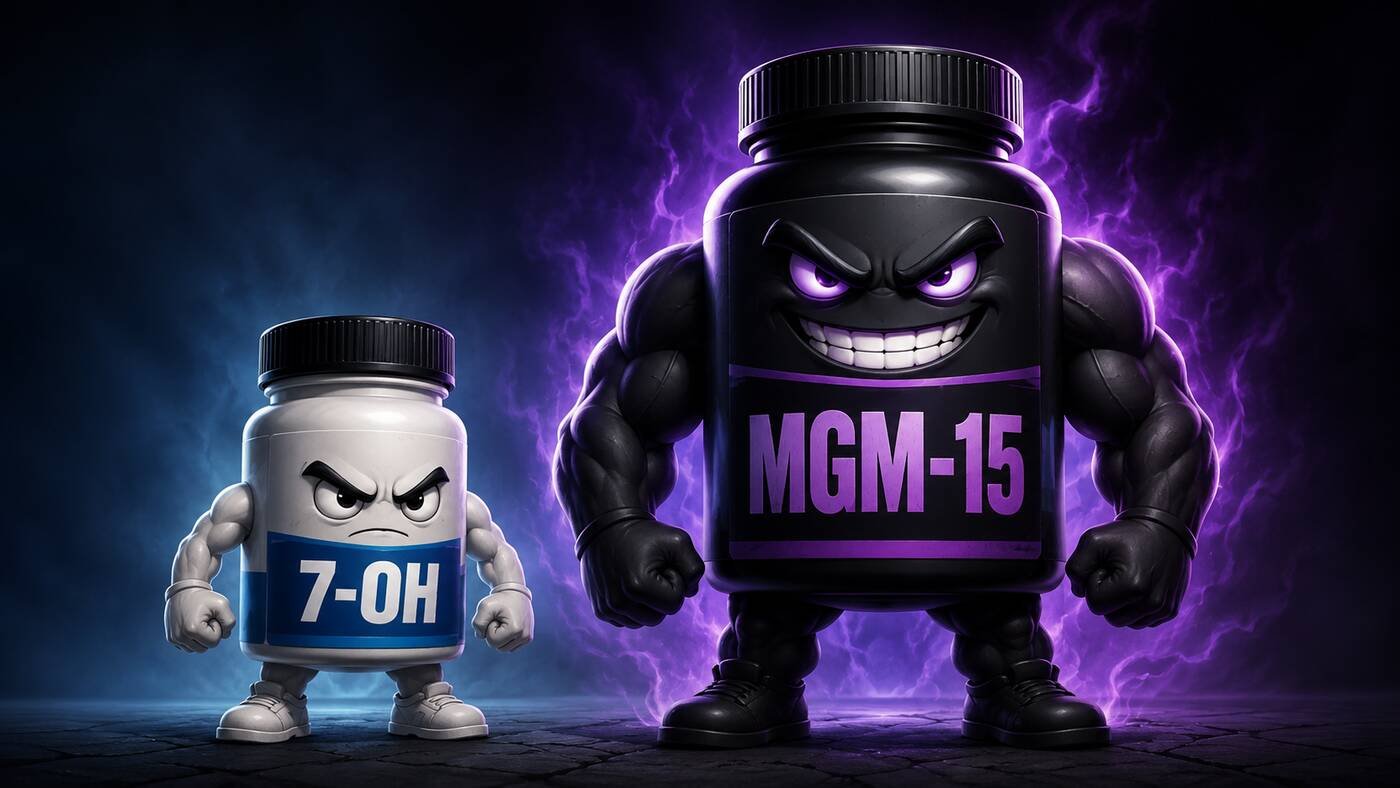
MGM-15 is important because it shows how quickly this market can change. HHS identifies MGM-15 as dihydro-7-hydroxymitragynine, a synthetic 7-OH derivative (HHS, 2026). It is being discussed alongside mitragynine pseudoindoxyl “Pseudo” and MGM-16 because regulators view these as related substances in the 7-OH category. Important note here is that MGM-15 is fully synthetic and greatly stronger than 7-OH.
For patients and families, the key point is this: MGM-15 should not be described as ordinary kratom leaf. It is part of the newer group of kratom derivate substances that may be synthetic, semi-synthetic, concentrated, or chemically altered.
That creates a moving target. A law or public health warning may focus on one compound, while the retail market shifts to another related compound. A person trying to avoid 7-OH may unknowingly buy something that contains a related derivative. A family member may search online and find older kratom information that does not address newer products. A clinician may ask about kratom use but miss the fact that the person is actually taking a high-potency tablet, drink, or synthetic derivative. In early 2026 Recover Clarity noticed that MGM-15 was a New Potential Opioid Threat and blogged about it to assist in getting information out there to everyone.
This is why product-specific questions matter.
Practical Questions Patients, Families, and Clinicians Should Ask
Rather than only asking, “Do you use kratom?” it may be more helpful to ask specific product questions. And often many patients may not be aware of true ingredients or concentrations of the products they were taking.
Product Identification Questions
What is the exact product name?
Is it a powder, capsule, extract, gummy, tablet, strip, drink shot, or liquid?
Does the label mention 7-OH, 7-hydroxymitragynine, 7-hydroxy, 7-OHMG, MGM-15, MGM-16, mitragynine pseudoindoxyl, or enhanced alkaloids?
Where was it purchased: online, gas station, smoke shop, convenience store, supplement store, or from another person?
How often is the person taking it?
Does the person wake up needing it?
How long does the person start to experience withdrawal symptoms after taking it?
Is the person combining it with alcohol, benzodiazepines, opioids, fentanyl, stimulants, antidepressants, or other substances?
These questions help separate traditional kratom use from concentrated or synthetic product use. They also help determine whether the person may need medical evaluation, withdrawal support, harm-reduction planning, therapy, or treatment for opioid use disorder.
These questions have changed over the years due to the changes with these products. 7-OH, started to be seen in more abundance starting around three years ago, with a time before that most people only consuming purer leaf-based Kratom. In the past year and especially the past six months, more products contain elevated levels of 7-OH and MGM-15, despite being labeled to appear more as natural Kratom. This is why knowing symptoms, usage, and product specific information is very important.
Why This Matters for People in Recovery
For people in recovery from opioid use disorder, the concern is not only legal status. The concern is how these products may interact with cravings, withdrawal memory, relapse risk, and the person’s sense of control.
Some people may begin using kratom or 7-OH products because they are trying to avoid fentanyl, heroin, pain pills, or other opioids. Others may use them for pain, anxiety, energy, mood, or sleep. Some may genuinely believe they are choosing a safer option. However, if the product begins creating physical dependence, compulsive use, withdrawal symptoms, or escalating tolerance, the person may find themselves back in a cycle that feels very similar to opioid addiction.
This is where shame can become dangerous. A person may delay asking for help because they feel embarrassed that a “legal” product became a problem. They may also fear being judged by family, treatment providers, or peers in recovery. A more helpful approach is to focus on what is happening now: the product used, the dose pattern, withdrawal symptoms, co-occurring mental health symptoms, relapse risk, and what support is needed.
Many people suffering from physical dependence on these products have no prior history of addiction. This causes a unique situation for them finding that they have unknowingly become physically dependent on an opioid-like substance. Not that anyone ever initially sets out with substance usage to become physically dependent, but it is different when someone is taking something they legally purchased and believed was natural. Due to this, 7-OH and MGM-15 Treatment is Unique for those patients, something us at Recover Clarity pay special attention to and tailored our therapeutic approaches to address.
This page is not meant to say that every person who has used kratom, 7-OH, or a related product has opioid use disorder. It is meant to help people recognize when a product is no longer functioning as a casual or occasional substance and has become part of a dependence cycle and that treatment is possible. And not everyone needs Medication Assisted Treatment (MAT) or Medication for Opioid Use Disorder (MOUD). But some may need these to help manage withdrawal symptoms such as Online Suboxone Treatment.
What Families Should Understand
Families often look for a simple answer: “Is this legal?” or “Is this just kratom?” Those are understandable questions, but they may not be enough.
A more useful family question may be: “What is this product doing to the person’s life?”
Is the person becoming financially strained because of frequent purchases?
Are they hiding products or minimizing use?
Are they irritable, sick, or anxious when they do not have it?
Are they using it before work, school, driving, parenting, or responsibilities?
Have they tried to stop and failed?
Are they using it to avoid withdrawal from another opioid?
Are they combining it with other substances?
Those patterns may matter more than the product’s marketing language. Whether the package looks like a supplement, candy, or legal alternative, the real concern is the effect on the person’s functioning, health, relationships, and recovery stability.
It is highly important not to shame or judge the person, and this is true for any addiction. The goal should be to help them get into a recovery program and help them regain control of their life. Especially for 7-OH, Pseudo, MGM-15, and Kratom you cannot assume the person intentionally sought out an opioid-like product. Families should look for getting accurate information, such as that provided by professionals in the field and ensuring their loved one is safe.
Public Safety and Emergency Concerns
Some situations require immediate medical attention. FDA advises calling 911 if someone is unresponsive after using a 7-OH product (FDA, 2025a). Texas health officials have also reported clinical presentations associated with 7-OH use that include nausea, vomiting, agitation, confusion, sweating, rapid heart rate, high blood pressure, trouble breathing, sleepiness or loss of consciousness, seizures, and respiratory depression (Texas DSHS, 2025).
For first responders and emergency providers, the exact product may not be known at the time of response. The immediate focus should be the person’s symptoms, level of consciousness, breathing, co-use with other substances, seizure activity, and need for emergency medical care.
Families should also be aware that products may be attractive or confusing to children and teens, especially if sold as gummies, candies, drinks, or flavored products. Products should be kept away from children, pets, and anyone who may accidentally ingest them.
A person should consider professional help if they cannot stop using a 7-OH, MGM-15, kratom extract, or related product despite wanting to stop. Help may also be appropriate if stopping causes withdrawal symptoms, if the person is using the product to avoid opioid withdrawal, if use is escalating, or if there is a history of opioid addiction.
Recover Clarity can help people evaluate the difference between occasional use, physical dependence, withdrawal, relapse risk, and opioid use disorder. We can provide medical assistance for anyone needing help in Pennsylvania and West Virginia.
The appropriate support should always be individual as treatment is not a “one size fits all” model. Some people may need education and monitoring. Some may need therapy and structured support. Others may need medical evaluation for opioid use disorder treatment. Recover Clarity now offers a self-paced educational course addressing 7-OH, MGM-15, MGM-16, physical dependence, withdrawal, treatment considerations, and recovery planning.
The most important first step is honesty about the exact product, the pattern of use, and what happens when the person tries to stop, especially the severity of withdrawal symptoms. Only with honesty can any provider truly help a person not only get their life back but become free of all substances. A goal at Recover Clarity is for those needing MOUD is Completing Suboxone Treatment.
When to Seek Help
Understanding What These Changes May Mean Personally
A change in a substance’s legal status does not, by itself, explain whether someone has developed tolerance, physical dependence, withdrawal symptoms, or a substance use disorder. Legal information can clarify what regulators are doing, but people and families may still need help understanding what the substance does, how patterns of use can escalate, and what options exist when stopping becomes difficult.
Recover Clarity’s 7-OH and MGM-15 educational course offers a guided way to learn about these issues without assuming that every participant needs the same type of intervention. The course is available through the Recover Clarity Education Hub. People who are already experiencing withdrawal, escalating use, repeated unsuccessful attempts to stop, or a return to other opioid use should review Recover Clarity’s 7-OH addiction treatment options and consider speaking with a qualified healthcare provider.
References
Drug Enforcement Administration. (n.d.). Drug scheduling. https://www.dea.gov/drug-information/drug-scheduling
Drug Enforcement Administration. (2026, July 1). DEA to temporarily schedule 7-OH and related substances to protect public safety. https://www.dea.gov/press-releases/2026/07/01/dea-temporarily-schedule-7-oh-and-related-substances-protect-public
Federal Register. (2026). Public inspection: Schedules of Controlled Substances: Temporary Placement of 7-Hydroxymitragynine above a Specified Threshold in Schedule I. https://www.federalregister.gov/public-inspection/2026-13580/schedules-of-controlled-substances-temporary-placement-of-7-hydroxymitragynine-above-a-specified
Federal Register. (2026). Public inspection: Request for Information: Temporary Placement of 7-Hydroxymitragynine above a Specified Threshold in Schedule I. https://www.federalregister.gov/public-inspection/2026-13608/request-for-information-temporary-placement-of-7-hydroxymitragynine-above-a-specified-threshold-in
Texas Department of State Health Services. (2025). Serious illnesses associated with 7-OH use. https://www.dshs.texas.gov/news-alerts/serious-illnesses-associated-7-oh-use
U.S. Department of Health and Human Services. (2026, July 1). HHS, FDA commend DEA action against dangerous enhanced 7-OH products. https://www.hhs.gov/press-room/hhs-fda-support-dea-7-oh-scheduling.html
U.S. Food and Drug Administration. (2025a). Products containing 7-OH can cause serious harm. https://www.fda.gov/consumers/consumer-updates/products-containing-7-oh-can-cause-serious-harm
U.S. Food and Drug Administration. (2025b). FDA issues warning letters to firms marketing products containing 7-hydroxymitragynine. https://www.fda.gov/news-events/press-announcements/fda-issues-warning-letters-firms-marketing-products-containing-7-hydroxymitragynine
U.S. Food and Drug Administration. (2025c). FDA seizes 7-OH opioids to protect American consumers. https://www.fda.gov/news-events/press-announcements/fda-seizes-7-oh-opioids-protect-american-consumers