

A Clinical Guide to 7-Hydroxymitragynine (7-OH) Addiction, Withdrawal, Triggers, and Recovery

Introduction: Why 7-OH Addiction Requires Its Own Treatment Framework
The rapid expansion of high-potency kratom extracts and synthetic 7-hydroxymitragynine (7-OH) products has created a new and evolving challenge within addiction medicine. While 7-OH interacts with the same opioid receptors involved in traditional opioid use disorder (OUD), the pathway into addiction, the psychological experience of dependence, the environmental triggers, and the potential legal consequences create a distinctly different clinical presentation.
It would be inaccurate to simply categorize 7-OH addiction as “just another opioid problem.” Physiologically, there are similarities. Psychologically and socially, there are important differences that must be addressed if treatment is going to be effective.
Many individuals who develop 7-OH dependence did not begin with the intention of misusing opioids. They often began with kratom, marketed as natural, legal, herbal, and/or safer. As Kratom has some medicinal benefits and small doses can be unproblematic, higher doses and tolerance increase can be of concern and lead someone to needing Kratom Addiction Treatment. Luckily, often this may not require additional medications and just therapeutic support.
For some Kratom usage has led to 7-OH consumptions. 7-OH creates a unique cognitive and emotional landscape that must be carefully navigated in treatment. And 7-OH Addiction Treatment may require medications to manage the severe withdrawal symptoms associated with this semi-synthetic concentration of the 7-hydroxymitragynine alkaloid.
Understanding these differences is critical not only for patients, but for clinicians, families, and the recovery industry as a whole. And it is expected that the new substance MGM-15 is a New Potential Opioid Threat and is likely to follow the 7-OH issues and make them worse due to MGM-15’s increased potency.
Understanding the Pharmacology: Why 7-OH Is Not “Just a Supplement”
Kratom (Mitragyna speciosa) contains multiple alkaloids, including mitragynine and 7-hydroxymitragynine. While 7-OH naturally occurs in relatively small concentrations in raw plant material (about 2% of the alkaloids), modern extraction processes and synthetic enhancements have significantly increased its potency in commercial products.
Preclinical research has demonstrated that 7-hydroxymitragynine acts as a potent partial agonist at the mu-opioid receptor (Kruegel & Grundmann, 2018). This receptor activity explains why individuals can experience opioid-like withdrawal symptoms when discontinuing high-potency products. 7-OH can be up to 13 times more potent than morphine.
Despite this pharmacological reality, retail marketing frequently frames kratom and 7-OH as wellness products. They may be described as mood-enhancing, focus-improving, or calming. The packaging often resembles dietary supplements more than controlled substances. And warnings of the addictive possibilities of these products are often nonexistent.
This marketing mismatch creates one of the core psychological differences in 7-OH addiction: individuals often do not perceive themselves as engaging in opioid use. When withdrawal symptoms emerge, the shock can be profound.
Addiction Without Intent: The Psychological Shock of Realization
Addiction rarely begins with intent to become addicted. No one wakes up and consciously decides to become dependent on heroin or fentanyl. Substance use disorders typically develop gradually through repeated exposure and neuroadaptation.
However, individuals who develop 7-OH addiction often report something distinct: they did not even realize they were engaging with a substance that functioned as an opioid.
Not that anyone every wants to become addicted to any substance. But those that tried heroin or other opioids likely were very aware of what they were experimenting with and the potential dangers. This is where 7-OH is different for many. And this is why accurate education about kratom, concentrated 7-OH, MGM-15, and MGM-16 is so important. Recover Clarity’s self-paced course on 7-OH, MGM-15, and MGM-16 provides structured education for individuals using these products, loved ones, clinicians, therapists, first responders, and other professionals.
More in-depth articles like the one on Is Kratom Really Safe? are needed to be shared and read so people are informed of the substances they are consuming.
How Usage Can Increase
They may have started Kratom to manage anxiety or uplift their mood. Some began using it as an alternative to alcohol, as the product is often marketed as an alcohol alternative. Others were attempting to manage chronic pain or taper from other opioids. In some cases, store employees suggested higher-potency extracts as “stronger” options, without detailed explanation of receptor activity or withdrawal potential. And some only tried 7-OH because of free samples given at their local store they were purchasing Kratom from.
*Note here, often the individuals working in the gas stations or vape stores which are selling 7-OH are not aware of the dangers of this product themselves.
Tolerance develops over time. The same dose no longer produces the same effect. Frequency increases. Potency increases. Eventually, when use stops, withdrawal begins.
Symptoms can include restlessness, muscle aches, insomnia, irritability, gastrointestinal upset, anxiety, and cravings (Singh et al., 2014). While severity varies, the experience is often similar to opioid withdrawal (some on higher doses reporting withdrawal symptoms worse than other opioids) that medication-assisted treatment (MAT) or medications for opioid use disorder (MOUD) becomes clinically appropriate. And this is where things like Online Suboxone Treatment may be of assistance.
The Shock of Needing Suboxone Treatment
At this point, many patients face a significant cognitive dilemma.
They believed they were using something natural. Now they are being told they may benefit from buprenorphine (Suboxone) or another medication for opioid use disorder (MOUD).
The internal narrative often sounds like this:
“How did I get here?”
“I didn’t even think I was using an opioid.”
“What does this say about me?”
“How did I let my life get to needing opioid medication.”
This psychological component must be addressed early in treatment. Without correcting misinformation and processing shame, patients may disengage or feel resistant to MOUD despite its potential benefits. As well as the guilt or shame they face need addressed and worked through in their Addiction Therapy.
The Visibility Factor: Unique Environmental Triggers

Another defining difference in 7-OH addiction is environmental visibility.
Traditional illicit opioids are typically obtained through underground networks and illegal activity. The environmental triggers may involve specific neighborhoods, social contacts, or concealed exchanges.
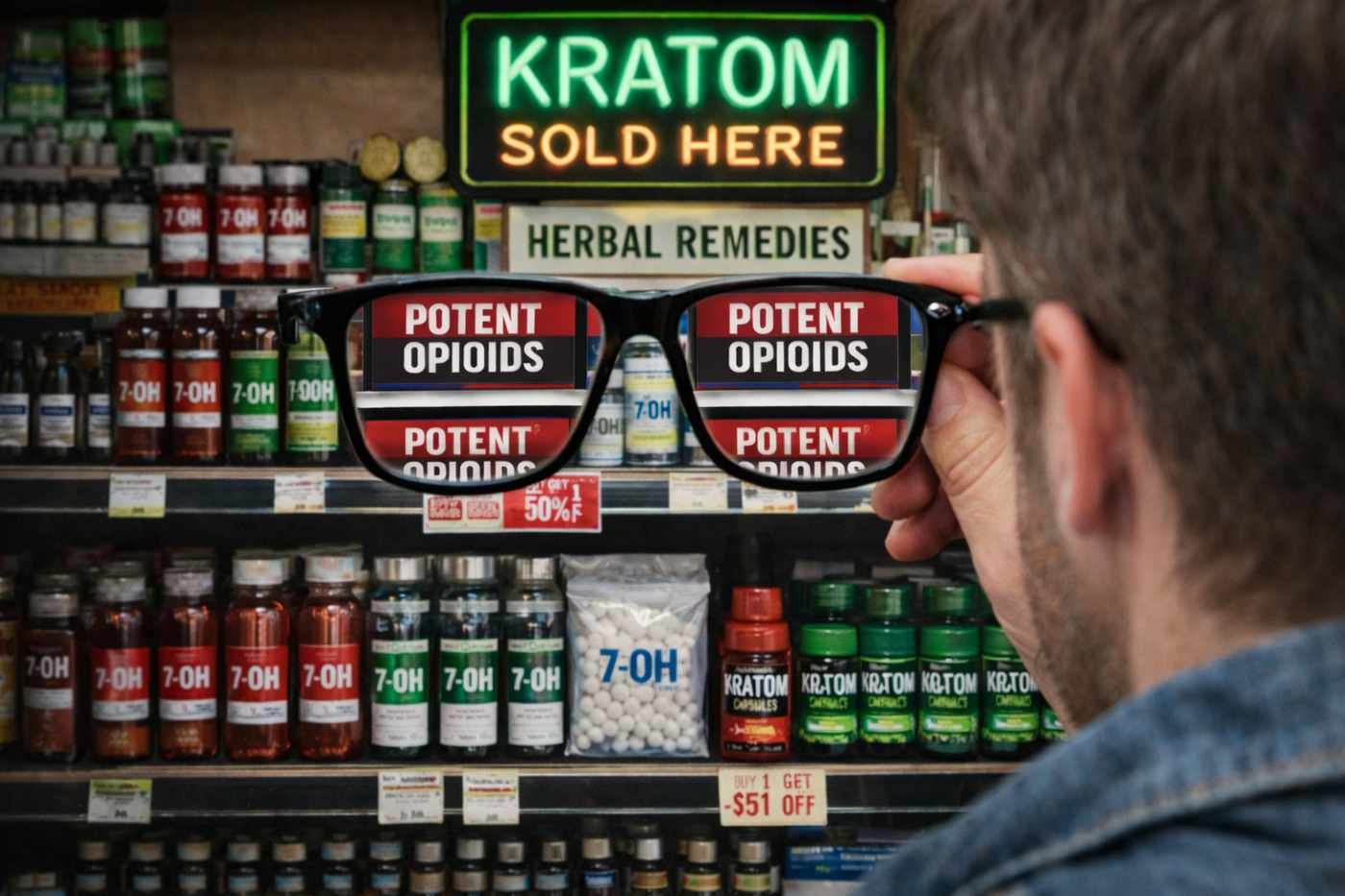
7-OH, by contrast, is sold openly in retail environments and through online markets. Gas stations and vape shops may display large neon signs advertising Kratom and 7-OH. Vape stores may have banners and flags. Online ads may appear while scrolling social media feeds. In some cases, even searching for information about risks may generate targeted advertisements to purchase the product.
This retail normalization changes relapse prevention planning dramatically then that of illicit opioids.
Driving home from work and passing the same storefront can become a conditioned cue. Stopping to pay for gasoline and seeing the product at the counter can trigger cravings. Even entering a different gas station may evoke associations if gas stations were historically connected to purchase behavior.
In states such as Pennsylvania and West Virginia, retail availability has been particularly visible.
Unlike alcohol, which is often restricted to specific sections of stores, Kratom and 7-OH products are frequently displayed directly at the register. Proximity increases exposure and reinforces habit loops.
Trigger management in 7-OH recovery must therefore account for ordinary daily activities such as fueling a car or driving past stores directly marketing to any passersby. This is in addition to traditional triggers that need discussed like that of any other substance use disorder and learning How to Identify and Avoid Triggers is still crucial in this treatment.
Internal Triggers: Attempts at Self-Regulation
Internal triggers in 7-OH addiction often stem from attempts at self-regulation rather than sensation-seeking.
Many individuals report beginning Kratom use to:
Reduce alcohol consumption
Manage stress
Enhance focus
Control chronic pain
Avoid traditional opioids
Ironically, some who sought to avoid opioid dependence may find themselves dependent on a substance with significant opioid receptor activity. Still requiring the same treatment for opioid use disorder, they originally were trying to avoid. And note here, I am not saying that Kratom has no assistance for treatment of opioid use disorder, just self-treatment and the availability of the substance can become problematic. 7-OH is a different story due to the potency of this concentrate.
This realization can intensify feelings of betrayal and hopelessness. Financial consequences may also become significant. Because products are purchased legally and repeatedly, cumulative spending can create debt and relationship strain. Some online markets for 7-OH and now MGM-13 even allow for installment payments allowing people to spend money they do not currently have.
Therapy must address not only cravings and relapse prevention, but also identity reconstruction. Patients must separate the concept of “being a bad person” from the reality of neurobiological adaptation. They must process misinformation without turning it into self-condemnation.
Why Generic Treatment Models Fall Short
Many large treatment organizations rely on standardized protocols. While structure and evidence-based frameworks are essential, applying identical treatment scripts to every substance can overlook critical differences. This is especially true for 7-OH from the unique difference already listed. And treatment should never be a “one size fits all” model, it should be individualized and personable.
7-OH addiction often includes:
Retail exposure triggers
Marketing-based misinformation
Sudden potency escalation
Financial distress
Legal uncertainty
Self-blame
Shock of being addicted
If treatment ignores these elements, patients may feel misunderstood.
Individualized care requires detailed assessment of how addiction developed, what environmental cues are present, what cognitive distortions exist, and what emotional consequences have emerged.
Recovery is possible, but it requires more than a binder of worksheets. It requires a personal and individualized approach with a mixture of therapeutic tools.
Legislative Flux: A Potential Public Health Shift

Regulatory status surrounding Kratom and 7-OH remains unsettled.
The U.S. Food and Drug Administration (2025) has requested that 7-OH be listed as a Schedule I Controlled Substance to the Drug Enforcement Administration (DEA) July 29th, 2025 (U.S. Food and Drug Administration [FDA], 2025). But this is not a new development as this is about 10 years in the making. The Drug Enforcement Administration has previously explored scheduling actions dating back to 2016, with the most recent update of adding Kratom as a “Drug and Chemical of Concern” on January 2025 (DEA, 2016; DEA, 20215).
If 7-OH were to become a Schedule I controlled substance, consequences could be immediate. Catching many people by surprise and possibly having them commit illegal activities without their knowledge.
Retail availability could disappear abruptly. Individuals dependent on high-potency products could experience sudden withdrawal. Treatment centers could see rapid increases in demand and need to be prepared to help those in need.
Without quick access to MOUD, some individuals may turn to illicit alternatives. The illicit opioid supply has become increasingly contaminated with synthetic opioids and adulterants such as medetomidine and xylazine, which have been associated with severe complications (NIDA, 2023).
Preparedness in the recovery industry is essential. Expanding telehealth capacity, increasing rapid intake access, and monitoring legislative changes are proactive measures that could prevent harm.
The Legal Shock: When Legal Becomes Illegal
Another underappreciated risk involves sudden legal exposure.
If 7-OH becomes a Schedule I controlled substance (either Federally across the nation, or a change in your state legislation), individuals who legally purchased and possessed the substance could suddenly face criminal liability. Someone carrying capsules in a purse or storing products in a vehicle may not realize the legal status has changed.
Unlike heroin or fentanyl, which are commonly known as illegal, Kratom and 7-OH may have been purchased openly and legally for years. The psychological impact of sudden criminalization could be destabilizing.
Charges could vary based on possession amounts or interstate travel. In some cases, quantity could be interpreted as intent to distribute and/or manufacture. The consequences could affect employment, licensing, and custody arrangements.
Therapeutically, this introduces another layer of stress, fear, and potential trauma that must be addressed compassionately.
Preparing for the Future
The recovery field must remain vigilant and flexible. This includes:
Monitoring state and federal legislation
Educating patients on legal developments
Scaling MOUD access
Training clinicians and therapists on 7-OH–specific pathways
Developing rapid-response intake systems
Preparedness reduces harm.
Conclusion: A Distinct and Emerging Clinical Category
7-OH addiction treatment is unique because it combines opioid receptor pharmacology with retail normalization, marketing misinformation, evolving legislation, and significant psychological shock.
Individuals often enter dependence unintentionally. Triggers are embedded in everyday environments and unavoidable while the substance(s) are still legal. Legal uncertainty creates additional anxiety and potential for unexpected legal consequences. Shame and confusion frequently accompany diagnosis.
Recovery is absolutely possible. Lives can be rebuilt. Financial damage can be repaired. Relationships can heal. Life can get back on track and even better with the right support.
But treatment must be individualized, timely, and responsive to the distinct realities of 7-OH dependence.
As the landscape continues to evolve, thoughtful, specialized care will make the difference between relapse and recovery.
References
Drug Enforcement Administration. (2016, August 30). DEA Announces Intent To Schedule Kratom. https://www.dea.gov/press-releases/2016/08/30/dea-announces-intent-schedule-kratom
Drug Enforcement Administration. (2025, January 22). Kratom [Drugs of Concern]. U.S. Department of Justice. https://www.dea.gov/taxonomy/term/311
Food and Drug Administration. (2019). FDA and kratom. U.S. Department of Health and Human Services. https://www.fda.gov
Kruegel, A. C., & Grundmann, O. (2018). The medicinal chemistry and neuropharmacology of kratom. Journal of the American Chemical Society, 140(18), 6470–6481.
National Institute on Drug Abuse. (2023). Xylazine drug facts. National Institutes of Health. https://nida.nih.gov
Singh, D., Narayanan, S., & Vicknasingam, B. (2014). Traditional and non-traditional uses of Mitragynine (kratom). Drug and Alcohol Dependence, 139, 132–137.
U.S. Food and Drug Administration. (2025a, July 29). 7-hydroxymitragynine (7-OH): An assessment of the scientific data and toxicological concerns around an emerging opioid threat. https://www.fda.gov/files/drugs/published/7-hydroxymitragynin_7-oh_an_assessment_of_the_scientific_data_and_toxicological_concerns_around_an_emerging_opioid_threat.pdf