

Performance and Confidence Imagery in Recovery: What Ancient Visualization Practices Can Teach Modern Healing
Recovery is often misunderstood as simply stopping the use of drugs or alcohol. In reality, true recovery is much broader than that. It is about rebuilding a person’s life as a whole. It can mean restoring damaged relationships, becoming a stronger parent, improving physical and mental health, returning to work, going back to school, finding stability, and creating a future that feels worth protecting. Because recovery involves so many parts of life, it often helps to have many different tools available. One tool that can be highly valuable, yet is not discussed enough, is performance and confidence imagery.
This type of imagery has a lot in common with older visualization practices such as deity visualization and deity yoga. While those traditions come from a very different historical and spiritual context, the overlap is important. Both involve using the mind intentionally. Both involve repeatedly focusing on qualities, behaviors, and outcomes a person wants to embody. Both recognize that the mind can be trained through practice. And both suggest that when we repeatedly rehearse healthier patterns internally, it becomes easier to live them externally.

The Ancient Roots of Visualization Practices
Many people think imagery practices are modern ideas created by psychology, sports coaching, or self-help culture. In reality, structured visualization practices go back well over a thousand years. Forms of deity visualization developed in India and later became highly refined in Tibet. These practices were often used as part of a spiritual path intended to help practitioners cultivate qualities such as wisdom, compassion, courage, discipline, and clarity.
The purpose in those traditions was not the same as modern therapy. The goal was spiritual transformation and movement toward enlightenment. However, there is still an important lesson that applies today. The mind responds to repeated training. If a person repeatedly focuses on fear, hopelessness, and failure, those patterns often become stronger. If a person repeatedly practices confidence, calmness, and healthier outcomes, those patterns can become stronger instead.
That same principle is seen throughout modern life. Athletes mentally rehearse performance before competition. Patients use guided imagery during medical treatment. Professionals prepare mentally before public speaking or interviews. Therapists use visualization to reduce anxiety and build confidence. While the language may differ, the concept is remarkably similar.
How This Connects to Addiction Recovery
This becomes especially meaningful in addiction treatment because many people entering recovery are carrying deeply painful beliefs about themselves and their future. Some may believe they have failed too many times. Others may think no one will ever trust them again. Some may feel that life will never improve, or that they are simply too damaged to change.
These thoughts can feel automatic. They may have been reinforced for years through active addiction, shame, trauma, broken relationships, or repeated setbacks. When those beliefs become strong enough, they can discourage a person from fully engaging in treatment or even trying again.
Recovery requires more than removing a substance. It often requires building new internal patterns. A person needs to begin believing that healing is possible, that growth is possible, and that the future does not have to look like the past. This is where performance and confidence imagery can be so helpful. It gives a person a structured way to mentally rehearse a healthier future until that future feels more believable and more reachable.
Recovery Is About the Whole Person
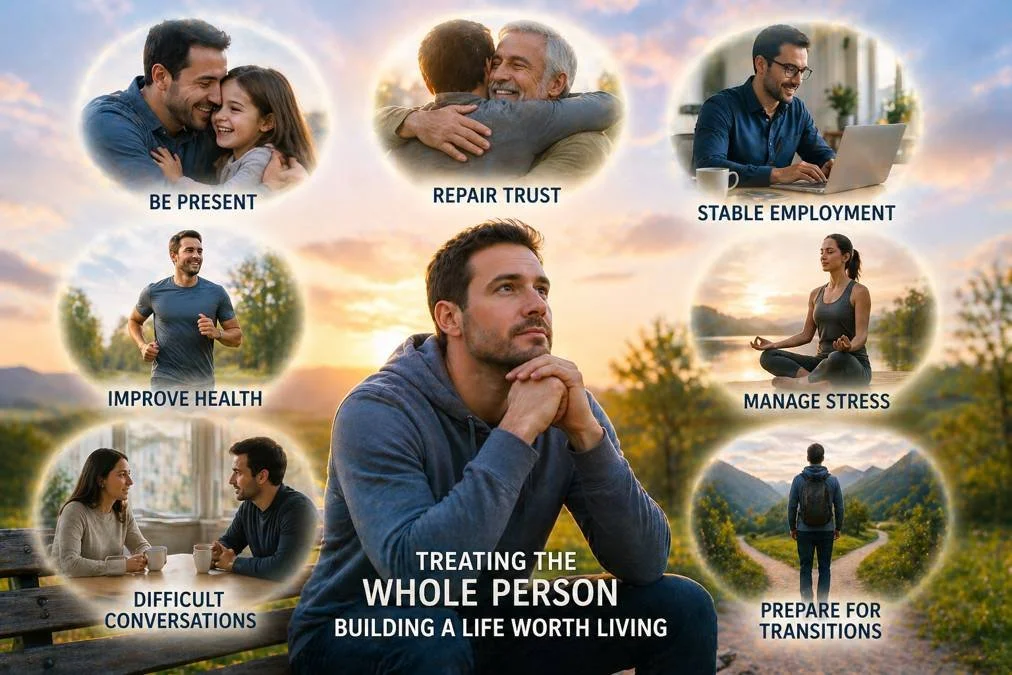
One of the most important things to understand is that addiction treatment should never be viewed as only treating addiction. It is about helping the person as a whole. For one person, that may mean becoming emotionally present again with their children. For another, it may mean repairing trust with family members. For someone else, it may mean getting stable employment, improving health, or learning how to manage stress without turning to substances.
That is why a practice like imagery has so much value. It is not limited to cravings or relapse prevention. It can also be used to support many of the life changes that make recovery sustainable. It can help a person mentally prepare for difficult conversations, job opportunities, new routines, major transitions, and stressful situations that might otherwise feel overwhelming.
Why Confidence Matters So Much
Confidence is one of the most important factors in any recovery journey. If a person does not believe change is possible, it becomes much harder to keep showing up, keep trying, and keep tolerating the discomfort that growth often requires. Confidence does not mean believing everything will be easy. It means believing that effort matters and that progress is possible.
A person with healthy confidence is more likely to attend treatment consistently, use coping tools, ask for help when needed, and continue forward after setbacks. They are more likely to pursue goals that once felt out of reach. They are also more likely to see themselves as someone worth investing in.
At the same time, it is important to note that confidence is not the same as overconfidence. Overconfidence can be dangerous in recovery. It may sound like:
“I don’t need support anymore”
“I can handle anything now”
“I don’t need to stay careful because I’m past that stage.”
Healthy confidence stays grounded. It combines hope with humility and continued effort.
As confidence is important, overconfidence is an often overlooked Internal Trigger in Addiction Recovery.
The Power of Repetition and Practice
One reason this approach can be effective is because it is a practice, not a one-time event. Just as exercise strengthens the body over time, repeated mental rehearsal can strengthen certain ways of thinking and responding.
If someone practices seeing themselves remain calm during stress, that response may become easier to access later. If they repeatedly visualize choosing recovery during a craving, that healthier pathway may feel more familiar when the real moment arrives. If they regularly imagine themselves succeeding in work, relationships, or treatment goals, those possibilities may begin to feel more natural and less intimidating.
This is one of the most important lessons to remember. We often become stronger in whatever we repeatedly practice, whether those patterns are helpful or harmful.
Examples of How This Can Help During Recovery
Beginning the Recovery Journey

The start of recovery can be one of the hardest phases. Many people are physically uncomfortable, emotionally overwhelmed, and uncertain about the future. Some have attempted recovery before and did not succeed. That can make it even harder to believe this time could be different.
But a past attempt does not mean future success is impossible. Sometimes previous efforts failed because the person was not ready yet. Sometimes they lacked proper support. Sometimes treatment quality was poor. Sometimes life circumstances were too unstable. There are many reasons why one attempt may not work.
Imagery can help early in recovery by allowing a person to mentally experience what success might look like. They may picture waking up with a clear mind, feeling healthier, rebuilding trust, laughing again, reaching thirty days sober, or simply feeling proud that they did not give up. When recovery becomes easier to imagine, it often becomes easier to pursue.
Repairing Relationships
One of the deepest wounds addiction can create is damage to relationships. Trust may have been broken through dishonesty, absence, financial harm, emotional pain, or repeated disappointments. Many people assume those relationships are gone forever.
While not every relationship can or should be restored, many can improve more than people expect. Imagery can help a person prepare for that process. Instead of walking into a difficult conversation overwhelmed by fear, they can mentally rehearse staying calm, speaking honestly, listening without defensiveness, and expressing accountability.
The goal is not to script every possible response another person may have. That would be impossible. A person could think of thousands of scenarios and still never predict the real conversation. The goal is to prepare your own healthiest response. When someone enters a conversation calmer, clearer, and more grounded, the chances of a productive outcome often improve.
Career Growth and Financial Stability
Recovery often opens the door to opportunities that once felt impossible. A person may begin thinking about stable employment, promotions, higher income, new careers, trade school, or college. These goals can be exciting, but they can also feel intimidating.
Confidence imagery can be helpful here because many people fail to pursue opportunities not because they lack ability, but because they lack belief in themselves. Mentally rehearsing success can make those next steps feel less foreign. A person can begin seeing themselves as capable, employable, dependable, and worthy of advancement.
That shift matters. Sometimes life changes begin internally before they become visible externally.
Job Interviews
Job interviews are stressful for almost everyone. For someone in recovery who may already be rebuilding confidence, they can feel especially difficult. Many people worry about freezing up, stumbling over words, or not presenting themselves well.
Imagery can be used to rehearse walking into the room calm and collected, answering questions clearly, making eye contact, and speaking with confidence. A person can mentally practice discussing their strengths, describing past work experience, and handling nervousness without shutting down.
This does not guarantee a perfect interview, but it often creates more ease, less anxiety, and a more natural flow when the real interview happens.
Completing Treatment and Taking the Final Step
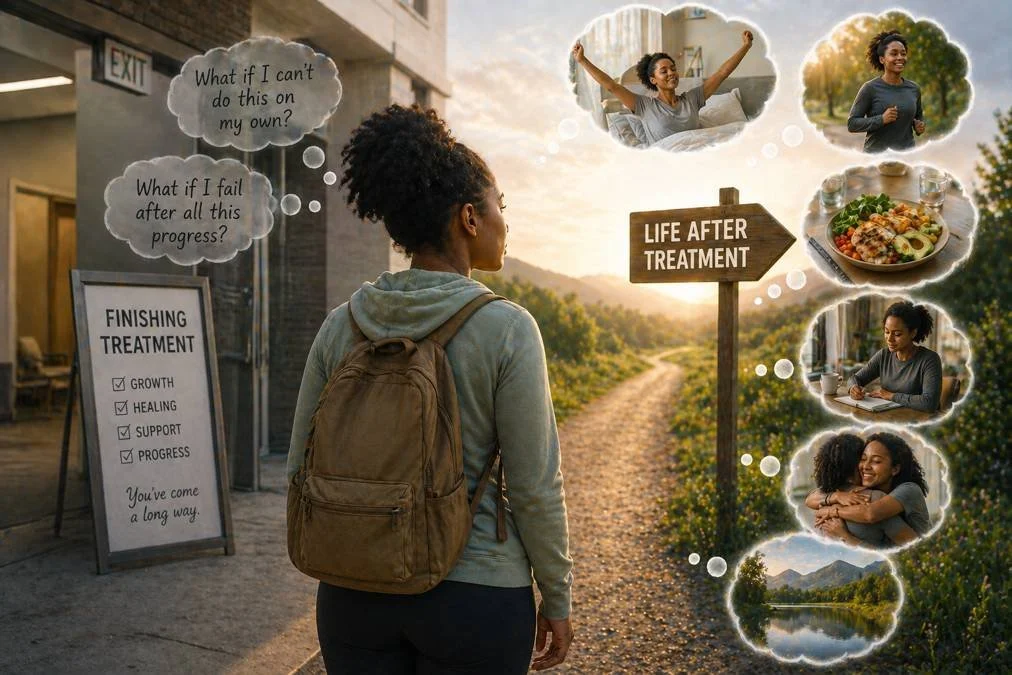
Starting treatment is important, but finishing treatment can be just as important. For some people, especially those who have relied on structure or medication support for a long time, the final stage of treatment can feel scary. Even positive change can bring anxiety.
There may be fears such as, “What if I can’t do this on my own?” or “What if I fail after all this progress?” These fears are understandable.
Confidence imagery can help by allowing a person to mentally experience life after treatment. They can imagine waking up free, maintaining routines, handling stress in healthy ways, and feeling proud of the progress they made. When the mind has practiced success, the final step often feels less overwhelming.
Completing Suboxone Treatment is something that is 100% achievable as long as the person has the desire and drive, as well as a caring and supportive treatment team.
Long-Term Recovery and Everyday Life
This practice does not need to stop after early recovery goals are reached. It can continue to be useful throughout life. A person can apply it to parenting, new relationships, major decisions, career advancement, stress management, public speaking, or any situation where confidence matters.
Stress remains a common trigger for many people, even years into recovery. Because of that, ongoing practices that reduce stress and build calm confidence can remain valuable long after formal treatment ends.
How to Practice Performance and Confidence Imagery
The process itself does not need to be complicated. Begin by finding a quiet place where you are unlikely to be interrupted. Sit or lie down comfortably and give yourself a few minutes to focus.
Start by calming the body. A simple way to do this is breathing in for a count of four and breathing out for a count of six. Continue for about a minute. This can help shift the nervous system out of stress mode and into a calmer state.
Next, release tension in the shoulders, jaw, hands, or anywhere else you are holding stress. Let the body settle.
Now choose one specific goal. It might be staying sober through a weekend, attending a job interview, speaking with a loved one, asking for help, or completing a stage of treatment.
Once you choose the goal, begin building the scene in your mind. Picture where you are. Notice the environment. Imagine how you carry yourself. Most importantly, imagine yourself responding well. See yourself calm, steady, honest, and capable. Feel what confidence would feel like in that moment.
Try not to force perfection. The point is not to imagine an unrealistic fantasy. The point is to mentally rehearse yourself functioning well.
Practicing for five to fifteen minutes once or twice a day is usually enough. There is no need to do it constantly. Too much focus on one situation can become stressful or lead to overthinking.
Over time, let the scenes evolve. What begins as imagining one week sober may later become imagining six months of progress. What begins as saying hello to a loved one may later become a healing conversation. What begins as answering one interview question may later become imagining an entire successful interview.
Think of It as a Toolbox
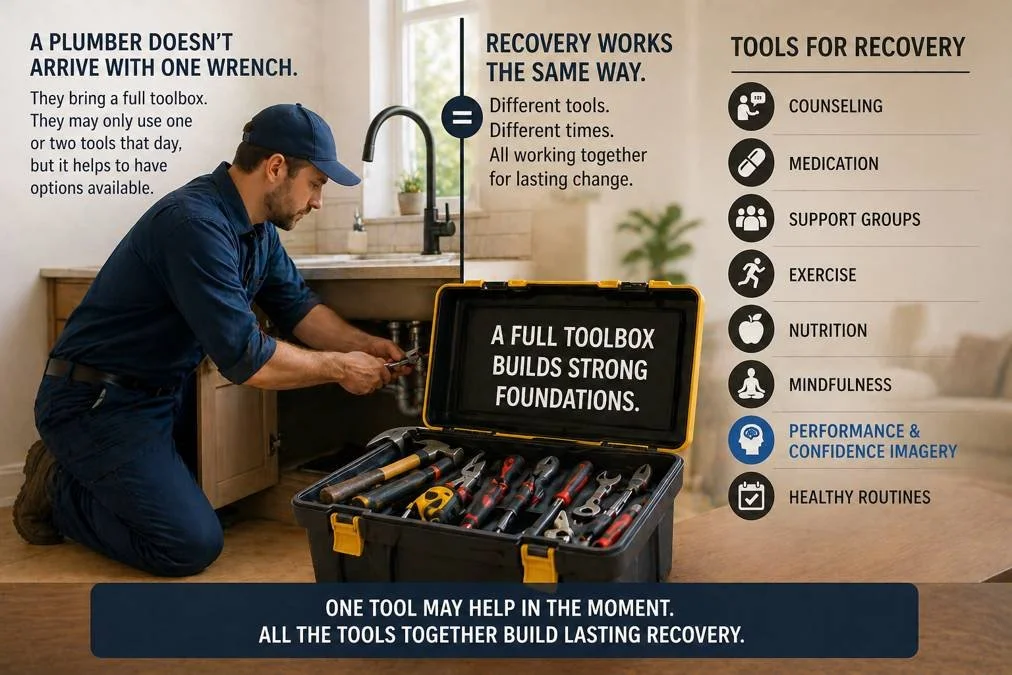
A helpful way to understand recovery is to think of a plumber coming into a house to fix a faucet. They do not arrive with one wrench. They bring a full toolbox. They may only use one or two tools that day, but it helps to have options available.
Recovery works the same way. Counseling may be one tool. Medication may be another. Support groups, exercise, nutrition, mindfulness, guided imagery, and healthy routines may all be additional tools.
Performance and confidence imagery is simply one more useful tool to have available. It may not solve everything by itself, but in the right moment, it can make a meaningful difference.
Final Thoughts
Performance and confidence imagery offers a practical connection between ancient visualization traditions and modern recovery support. It reminds us that the mind can be trained, that confidence can be strengthened, and that healthier futures can be rehearsed before they are fully lived.
For people in recovery, that can be incredibly powerful. When someone begins to see themselves as capable, worthy, and able to grow, they often begin acting in ways that support that identity.
Recovery is possible. Change is possible. Confidence can be built through practice. Sometimes the first step toward a better future is learning how to picture it clearly enough to believe in it.