Guided Imagery With Music
How I Discovered Guided Imagery with Music (Before I Knew the Psychology Behind It)
This blog is on guided imagery, but not just guided imagery in the way most people think about it. It’s about a type of guided imagery that I originally thought I had created myself (not fully), but have perfected over three decades using memory, condition, and psychology to create a portable relaxation technique.
As it turns out, I’m not the first person to combine music and imagery. But the way I practice it and the way I’ve refined it through lived experience and my background in psychology, is, from what I can find, not exactly the same as what’s already out there. Which is also not all that shocking due to my views not always aligning with traditional medicine and my studies of many philosophies around the world.
Let me explain how this came about.
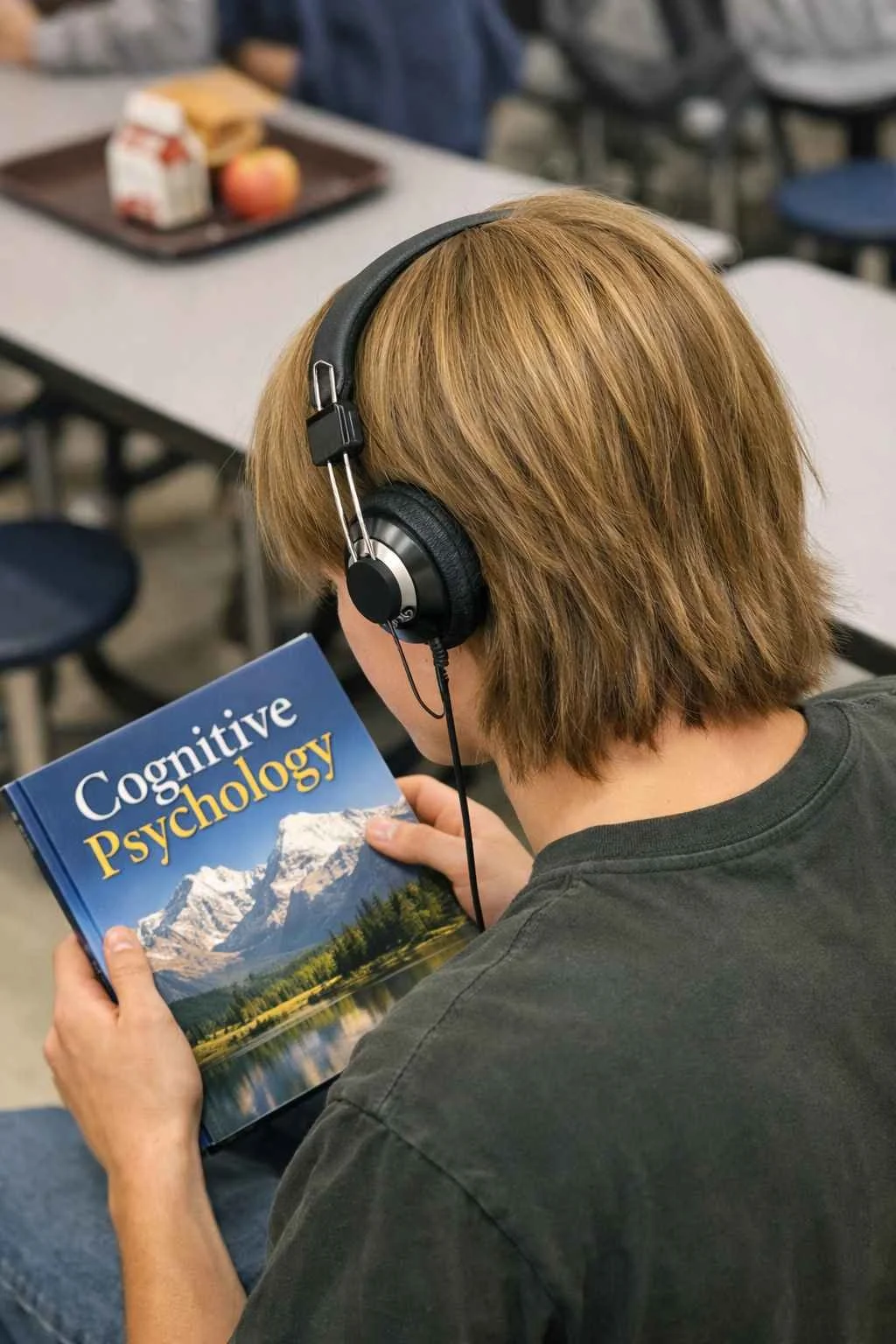
I was 14 years old when I first came across Tao Te Ching (the one translated by Stephen Mitchell). I was reading it in the lunch cafeteria when some football player “jocks” were making fun of me for reading a book on Asian philosophy. It was at this exact moment when I was reading the lines (Mithcell, 1988):
“Those who know don’t talk.”
“Those who talk don’t know.”
That moment solidified something in me. Which changed my life forever and took me completely down the path of studying other religious philosophies and changing my perspective on the world.
I had already struggled with depression and anxiety as a kid. I was looking for something to help me understand my inner world. Not long after finishing the Tao, I started reading Buddhism and other Eastern practices/philosophies. That’s where I discovered guided imagery and have been writing on this practice for years (with prior companies) and have ample blogs on this beneficial practice on this website, read the first blog here at Intro to Guided Imagery for Addiction. I began practicing guided imagery shortly after this moment in life, adding peace I greatly needed. Finding this practice learning about Tibetan Buddhism.
But the music component I am writing about today? That came by accident.
What Is Guided Imagery with Music?
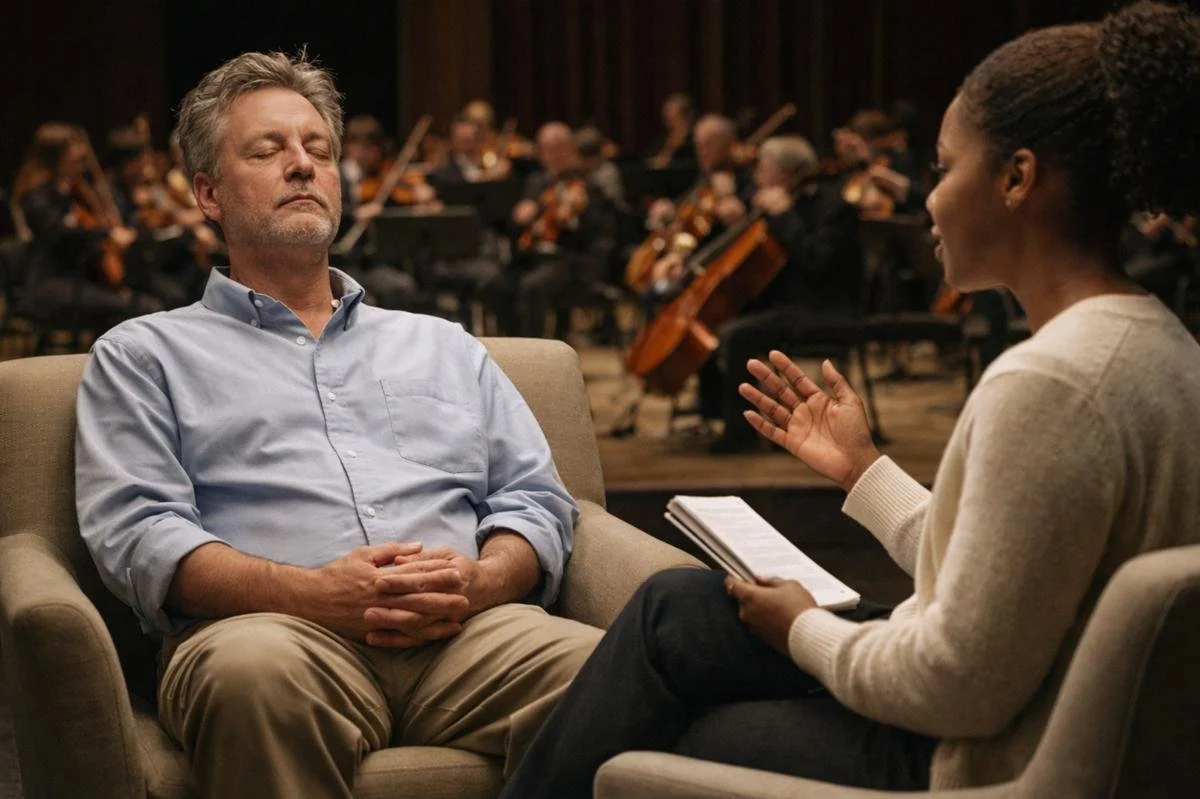
Guided imagery with music is a psychological relaxation technique that pairs a neutral song with a calm emotional state. Over time, the music becomes a cue that helps regulate the nervous system and recreate that state to be used during moments of stress.
Unlike traditional guided imagery sessions that require silence and focused visualization, this music-based relaxation technique works passively. It allows you to regulate your emotional state while driving, walking, or moving through daily life. Because it uses established psychological principles like conditioning and state-dependent learning, it offers a practical, portable tool for anxiety and stress management, as long as you have the ability to take a few deep breaths and listen to your music.
The Walkman Experiment (Before I Knew It Was Psychology)
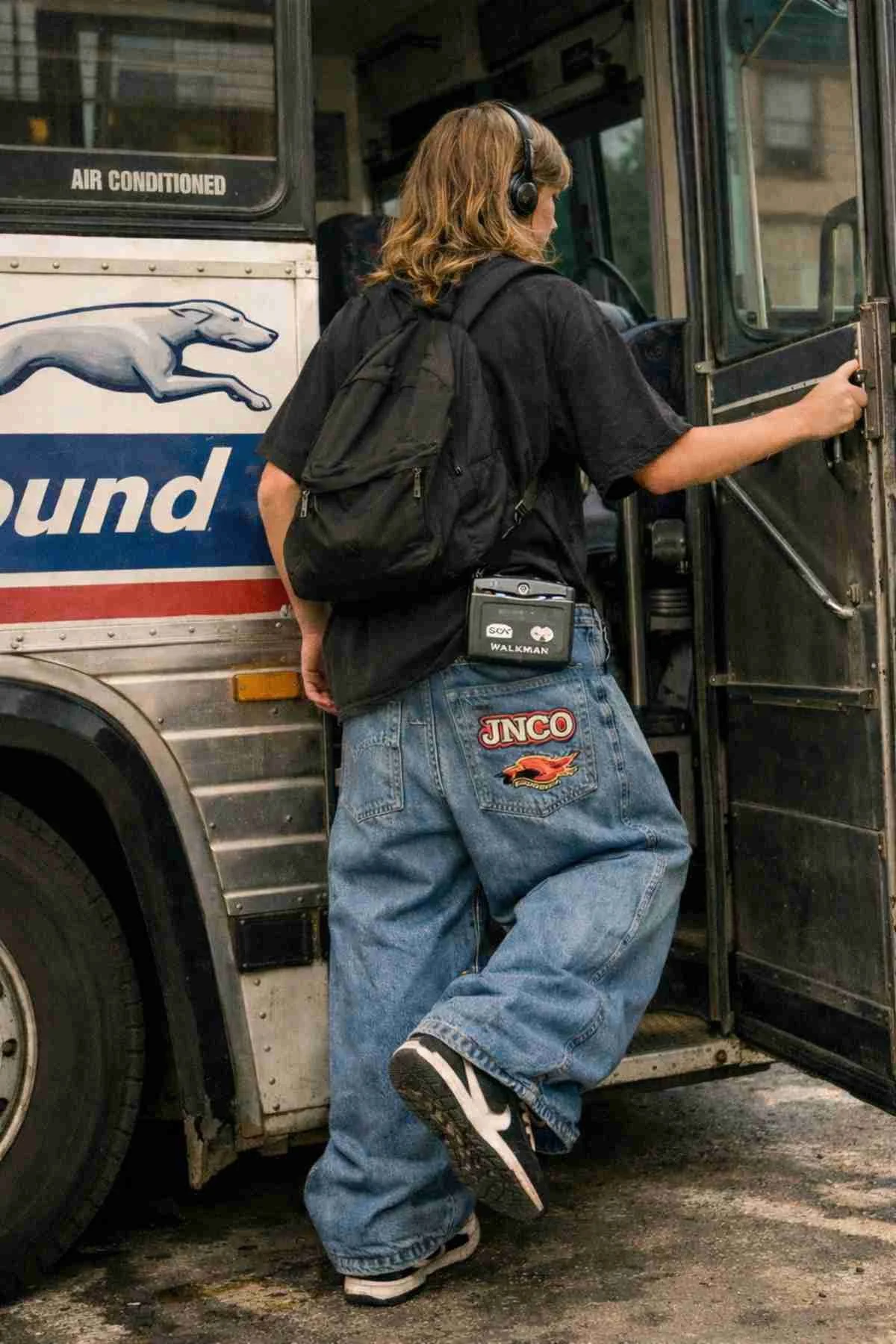
When I was 15, I packed a backpack and took my own solo journey up and down the East Coast of the United States. If you are wondering, YES, I was grounded for a very long time afterward, and still to do this day will not mention this trip around my parents, lol.
I brought my Walkman (for those who do not know what this is, look it up, it is a portable cassette tape player). Not a Discman (at the time the newer portable CD player) that was too bulky and very prone to skipping. Just my Walkman clipped to my belt and a few cassette tapes in my backpack. I spent probably 25–30 hours on Greyhound buses during this trip. And when you only have a few tapes, you end up listening to the same songs over and over and over.
To this day, a few of those songs immediately transport me back to that trip.
Years later, after studying psychology for over nine years and a couple of Master’s Degrees, I realized what had happened neurologically during this trip. Do know that even before this, I continued this practice of music association with travel, nature, and to evoke a calming relaxing feeling in myself.
There is a body of research on what’s called music-evoked autobiographical memory (MEAM). Studies show that music can trigger vivid, emotionally rich, scene-like memories and activate brain regions associated with autobiographical recall and emotion (Janata, 2009; Belfi et al., 2016). In many ways, it creates a kind of “mental time travel.”
So, what I stumbled into accidentally at 15… I later began doing it intentionally.
This Is Not the Bonny Method (But It’s Built on Real Foundations)
To be clear, using music in guided imagery is not new.
In the 1970s, Helen Bonny developed the Bonny Method of Guided Imagery and Music (GIM), a structured therapeutic process using carefully sequenced classical music to evoke imagery and emotional processing (Bonny, 2002). The Association for Music and Imagery continues to support clinical standards and research in this area.
GIM and related music-imagery approaches have been studied in trauma treatment, mood disorders, and eating disorder populations. These all require a therapist-led clinical session along with often classical music along with a highly structured imagery setting. But research does support this practice, but not something I have personally tried, but research is very promising and could be a great avenue for those wanting to try the Bonny Method.
But what I’m describing here is different.
This isn’t therapist-led.
This isn’t a 45-minute clinical session.
This isn’t deep, structured imagery processing.
This is portable.
This is every day (at times many times in a day).
This is conditioning your nervous system intentionally.
The Core Psychological Principles
There are three main psychological mechanisms at play with this version of a music based guided imagery relaxation practice.
1. The Psychology Behind Music-Evoked Memory (MEAM)
Music can cue emotionally intense, vivid personal memories (Janata, 2009). These memories often include sensory components such as sights, sounds, smells, and physical sensations, which make them powerful anchors.
Many other research studies support this strong emotional tie to music. Learning how to use this to your advantage to later bring up relaxing memories is such an important part of this practice.
2. State-Dependent Learning and Why Music Can Recreate Emotional States
Research in memory science shows that internal states present during encoding can influence later retrieval (Eich, 1995). In simple terms: it’s easier to re-enter a mental state when the original cues are present.
If you were calm and grounded while repeatedly hearing a song, that song can help recreate that state later. This is key to why setting this up is important during times of relaxation such as on a vacation or something like a calming hike in nature.
3. Classical Conditioning and Using Music as a Relaxation Anchor
Repeatedly pairing a neutral stimulus (a new song) with a relaxation response can condition that stimulus to evoke aspects of that response later (Bouton, 2007).
We are deliberately installing a cue by doing this. And why is the importance of choosing a new song crucial to this practice? Using a song with any other associations to it will not have this same effect.
Why You Must Use a Brand-New Song
Songs already carry emotional history. Even if you are not aware of any specific memories of a song, there could be subconscious ties to the song you are not directly aware of. Either way the song is not new and a completely neutral stance for you.
If a song reminds you of heartbreak, grief, or even a different type of happiness, let it stay there. And having such songs in our lives are still important to us and that importance should stay where it is at with those prior memories.
For this practice, you want something neurologically “clean.”
You are creating the association from scratch.

What Kind of Music to Chose
This is one that I find very interesting in how this has worked in my life. I started trying to only find new music that would fit the trip or destination. But this has very little weight in how this works, the song will find you. For instance, on a trip to Japan, the song was Rasta Beach Vibes, in Greece it was country music, Alaska was indie rock, and so on, almost never has the music aligned with the “vibe” of the area. And no matter how I tried to force this to align it just never happens.
But there is one important thing to pay attention to with the choice of music, chose a song that is happy. Do not choose a song that has negative lyrics or a depressing beat. The concept is to be relaxed, uplift your mood, remove stress, and we want the music to be similar. Upbeat music is fine, the music does not have to be a relaxing song and should be something you do truly enjoy as this song(s) will stay with you for life.
Ways To Start This Practice – Setting the Scenario to Pair the Music
There are a few ways to go about setting up this music-based relaxation practice. These will vary depending on a few factors and will be different for every person. I will provide two different scenarios that can be set to provide the setting for the memory associated with the music. And know that in the vacation setting, sometimes vacations do not go as planned, which is just how life goes at times. If this happens, sadly then the song will not work as it could only bring up feelings opposite of relaxation. The second scenario is based off a hike, but this truly can be any situation which you find calming, relaxing, and ultimately you feel at peace while there.
Scenario One: How to Practice Guided Imagery with Music on Vacation
Before your trip, create a new playlist. Explore new music and add around 15 songs to this new playlist for that vacation.
Because here’s something I’ve learned:
The song will choose you. Often you will notice the song or two that is sticking more to the trip, at this point, play this song(s) more often.
Play it repeatedly during the calm, meaningful parts of the trip. Don’t play the song while stuck in traffic, while getting ready in the morning, or other less memorable times of the trip.
Repetition strengthens encoding. Emotional intensity strengthens encoding. Context strengthens encoding. Remember these for times when you are playing your song(s).
That’s memory science.
Scenario Two: How to Use Music Conditioning During a Hike or Peaceful Location
You don’t need vacation or distant travel for this to work.
Find a peaceful location near you, a hike, a park, a meadow, a favorite bench. Ideally the scene will be outdoors as that allows for other sensory information in the memory which will help with the relaxation of this technique (and warm sunny days are also best).
There’s a section of trail near me overlooking the Laurel Highlands. I would play the same song every time I reached that exact spot. Within 5–7 hikes, the association was locked in.
Now that song instantly evokes:
Warm air
Scents of the trees
Mountain view
That’s conditioning in real time.
How to Use This Technique During Stress or Anxiety

You’re stuck in traffic.
You’re overwhelmed, for any reason.
Pause.
First, take a few breaths to prime your body to relax.
Take four count inhale.
Six count exhale.
Repeat a few times while allowing the tension in your body to relax some.
Now play the song.
You are using breath to calm the autonomic nervous system.
You are using music as the cue for relaxation.
You are allowing state-dependent retrieval to occur.
This is not as active as traditional guided imagery It’s more passive. More portable.
But it works on the same foundational principles.
How to Strengthen the Music-to-Memory Association
One modern addition:
Take short videos during the peaceful moment.
Edit them with your chosen song.
Save them privately (or post them publicly), but have them easily retrievable.
Now you’re pairing auditory and visual memory.
Multisensory encoding strengthens retrieval.
Watch these videos from time to time to help strengthen this encoding and just for your own personal enjoyment.
Why This Is a Practice — Not a Quick Fix
This isn’t magic.
This isn’t mystical.
This is psychology.
Find a peaceful state.
Pair it with a neutral cue.
Repeat.
Over time, the music becomes the bell.
And when it rings, your nervous system answers.
Frequently Asked Questions About Guided Imagery with Music
Does music really trigger memory?
Yes. Research in cognitive neuroscience shows that music strongly activates autobiographical memory networks in the brain (Janata, 2009).
Is this the same as meditation?
No. This is more of a conditioned relaxation cue than a formal meditation practice.
How long does it take to work?
Typically 4–7 repetitions in the same context can begin forming a conditioned association.
Does this divert attention as well as traditional guided imagery?
No. Guided imagery is still an amazing practice to accompany this, this practice is just more practical in some situations and quicker to provide some stress reduction and relaxation.
Written by a clinician with graduate-level training in psychology and years of experience integrating mindfulness, behavioral science, and evidence-based recovery practices.
References
Belfi, A. M., Karlan, B., & Tranel, D. (2016). Music evokes vivid autobiographical memories. Memory, 24(7), 979–989.
Bonny, H. L. (2002). Music consciousness: The evolution of guided imagery and music. Barcelona Publishers.
Bouton, M. E. (2007). Learning and behavior: A contemporary synthesis. Sinauer Associates.
Eich, E. (1995). Searching for mood dependent memory. Psychological Science, 6(2), 67–75.
Janata, P. (2009). The neural architecture of music-evoked autobiographical memories. Cerebral Cortex, 19(11), 2579–2594.
Mitchell, S. (1988). Tao te ching (S. Mitchell, Trans.). Lao Tzu. Harper & Row.