Relapse Concerns and The Holidays
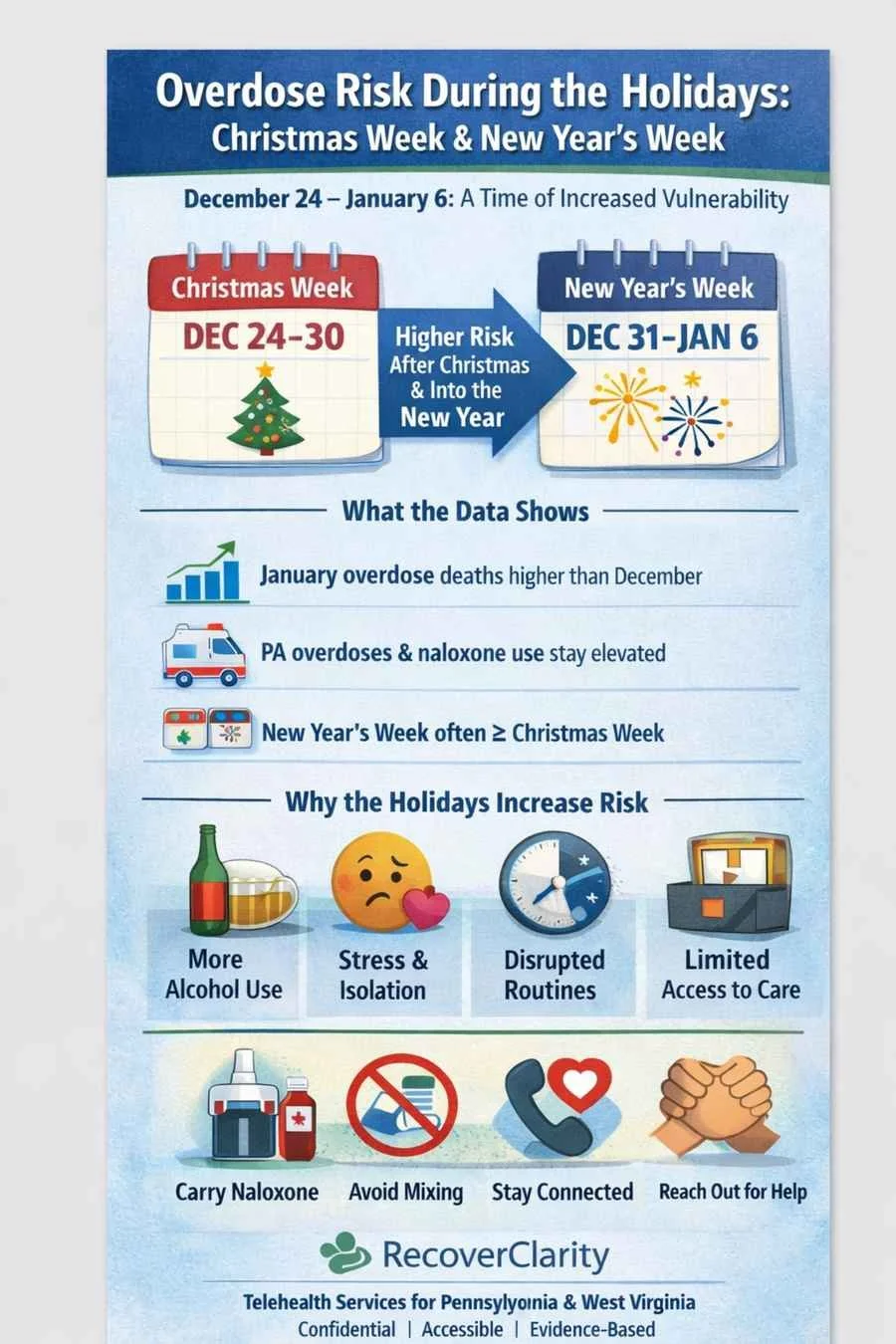
Christmas and the New Year are supposed to be joyful holidays. However, these can also be especially stressful times of the year for many, and for reasons many may not be aware of. And basic research on the internet may lead people to believe that overdoses are higher during the holiday season, which is honestly difficult to empirically prove with research, at least in the states of Pennsylvania and West Virginia.
The Center for Disease Control and Prevention (2025) does have provisional data which can be viewed for each state. This data gives predictions of what the data for overdoses by state, month, year, and varying drug classifications. Looking at this data, you will see there is a typical decrease in overdoses during the month of December, with increases usually during warmer months. But this does not indicate that relapses may not be of higher concern during winter, especially around the holidays.
As December may have lower overdose rates, these rates see an increase in January. There may be many factors that play into this, but many are unknown. One possible factor is gaps in treatment during the holiday season. Some of the potential factors:
Treatment facilities have shorter hours and fewer days of operation during the holiday season
Pharmacies have decreased hours and closed on holidays
Traveling to be with family can cause missed treatment appointments
Financial changes during the holidays can cause people to cancel appointments
If you or a loved one is in need, Recover Clarity is here to help, click here to Contact Us.
Stress Around the Holidays
When discussing stress there is an importance to understand that not all stress is a negative thing. There are distress and eustress, it is distress that is what most people think of when describing “stress” in their life. Eustress is a positive stress that is motivating, and the way we frame things in life can at times even change situations or aspects of life that are distress into eustress, such as the holidays and family interactions. This is where Practices in Mindfulness can be of assistance in stress management and reframing of our thoughts or cognitions.
Holidays can also bring about other stressors that are more unique, especially to Christmas. This is the stress that can come from financial hardships. As our culture has become more materialistic and the advertising of Christmas shopping now starts as early as September, this can make some feel extra pressure to purchase more Christmas presents. Again, reframing can assist with this, as the importance should be the holiday itself and the thoughtfulness placed into the present, not the price tag.
Triggers and The Holidays
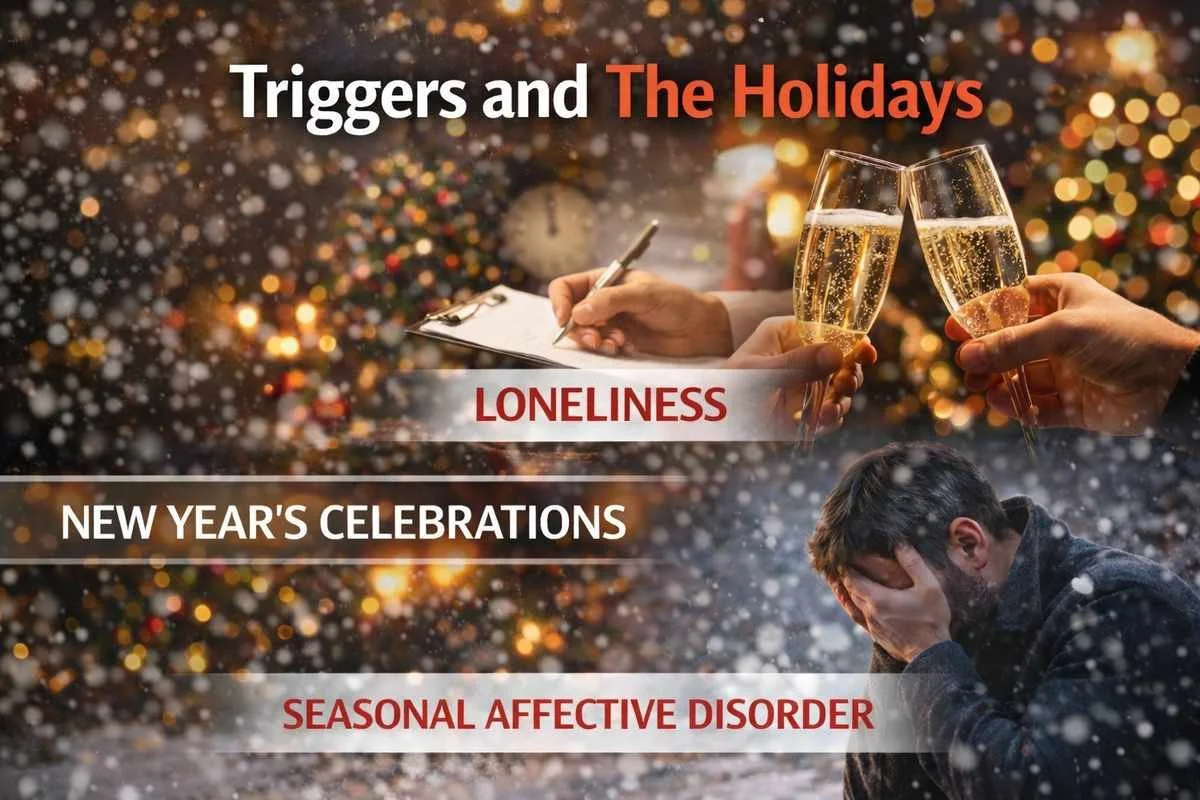
The holiday season has the chance to bring additional triggers for those who struggle with addiction. These may affect some and not others but knowing the possibility of their presence is important to assist in decreasing their effects. At times people are not aware of all their possible triggers and that is why utilizing a trained professional, such as an Addiction Counselor can assist in helping a person realize all their potential triggers. These counselors are also able to assist a person with building healthier coping strategies when triggers are present.
Feelings of Loneliness
A major trigger for those who have substance use disorders is the feeling of loneliness. This is so much that it is one of the four major factors which can affect decision making strategies. This pertains to the H.A.L.T. concept of Hungry, Angry, Lonely, and Tired. In the blog on Addiction Trigger: Identifying and How To Avoid Them, these trigger areas are more thoroughly discussed.
How Loneliness Pertains to The Holidays
Loneliness around the holidays can be present for many reasons, but for those in recovery it could be more than that for others. Individuals early in their recovery journey may still be repairing damaged relationships from their period of active addiction. During this time, they may not be as welcomed around family and/or friends as they were in the past. This factor could easily add to the feelings of loneliness and isolation during the holiday season.
In recovery an important part is to avoid people, places, and things that are triggering. Because of this well-known need for change to support a successful recovery journey, many “friends” from the time of active addiction will not be present. This, along with the previously mentioned concerns, could potentially leave a person with very minimal contacts during the holidays. If you have a loved one that is going through their recovery journey, please make sure to include them during the holidays and check in frequently on them, as is just good to do at any time of the year.
New Year’s Celebrations
New Year’s Eve is traditionally known as a time to “celebrate” and highly associated with alcohol consumption. This time of year, could be very triggering for any person with a history of addiction. If you have a loved one who is working on recovery, be very mindful of this, do not pressure them to attend any event where excessive celebrating with any substance is going on. Alcohol consumption can also put a person at risk of relapse as their ability to make rational decisions and a decrease of impulse control could lead to substance usage.
Seasonal Affective Disorder (SAD)
Many may have heard of Seasonal Affective Disorder (SAD) and is most associated with winter but can also affect some during the summer as well. SAD is a biologically driven mood disorder that most commonly occurs during late fall and winter and resolves during spring. For people with a history of substance use disorders (especially alcohol), winter based Seasonal Affective Disorder can increase the risk of relapse.
SAD is a subtype of Major Depressive Disorder (MDD) with a seasonal pattern. Common symptoms include:
Persistent low or depressed mood
Fatigue and low motivation
Hypersomnia (sleeping longer than usual)
Increased appetite, especially carbohydrate cravings
Weight gain
Difficulty concentrating
Social withdrawal and isolation
Unlike situational stress or short-term sadness, SAD follows a predictable annual pattern, often returning every winter without treatment (Meesters & Gordijn, 2016).
Why Winter SAD Can Increase Substance Usage
1. Self-Medication of Depressive Symptoms
One of the strongest links between SAD and substance use, particularly alcohol, is self-medication. Research has shown that some individuals increase alcohol or drug use during winter months as an unhealthy coping mechanism for:
Depressed mood
Anxiety and irritability
Emotional numbness
Sleep disturbances
Alcohol and other substances may provide temporary relief. But the reality is they only worsen depressive symptoms, disrupt sleep, and increase dependency risks or further relapse (Sher, 2004).
2. Sleep Disruption and Circadian Rhythm Changes
Winter Seasonal Affective Disorder is closely tied to circadian rhythm dysregulation. This is due to the decrease in daylight exposure during the fall and winter months. This disruptive change commonly leads to:
Oversleeping or irregular sleep schedules
Poor sleep quality
Daytime fatigue
Sleep disturbance is one of the strongest predictors of relapse in individuals with substance use disorders. Sleep is a very important aspect of life affecting use physically and mentally. Many studies have shown that people with both SAD and alcohol use disorder report significantly worse sleep and health-related quality of life than those with either condition alone (Morales-Muñoz et al., 2018; Sher, 2004).
3. Reduced Social Support, Structure, and Activity
Shorter days and colder weather often mean:
Less physical activity
Fewer social interactions
More time spent alone indoors
Substance Abuse and Mental Health Services Administration (2024) reports that the reduction in protective structure and positive reinforcement can increase vulnerability to cravings and impulsive substance use, especially for individuals already managing recovery. This leads to the possible increase for relapses during colder months, with the darkest day of the year only being four days before Christmas.
References
Centers for Disease Control and Prevention. (2025, September 17). Products - vital statistics rapid release - provisional drug overdose data. Centers for Disease Control and Prevention. https://www.cdc.gov/nchs/nvss/vsrr/drug-overdose-data.htm
Goedel, W. C., et al. (2019). Increased risk of opioid overdose death following cold temperature in Rhode Island and Connecticut, 2014–2017. International Journal of Drug Policy.
Meesters, Y., & Gordijn, M. C. M. (2016). Seasonal affective disorder, winter type: Current insights and treatment options. Neuropsychiatric Disease and Treatment, 12, 281–287.
Morales-Muñoz, I., et al. (2018). The effects of seasonal affective disorder and alcohol use disorder on sleep and health-related quality of life. Journal of Sleep Research, 27(6).
Sher, L. (2004). Alcoholism and seasonal affective disorder. Comprehensive Psychiatry, 45(1), 51–56.
Substance Abuse and Mental Health Services Administration. (2024). More than winter blues: Understanding seasonal affective disorder.