Addiction Education and Training Courses
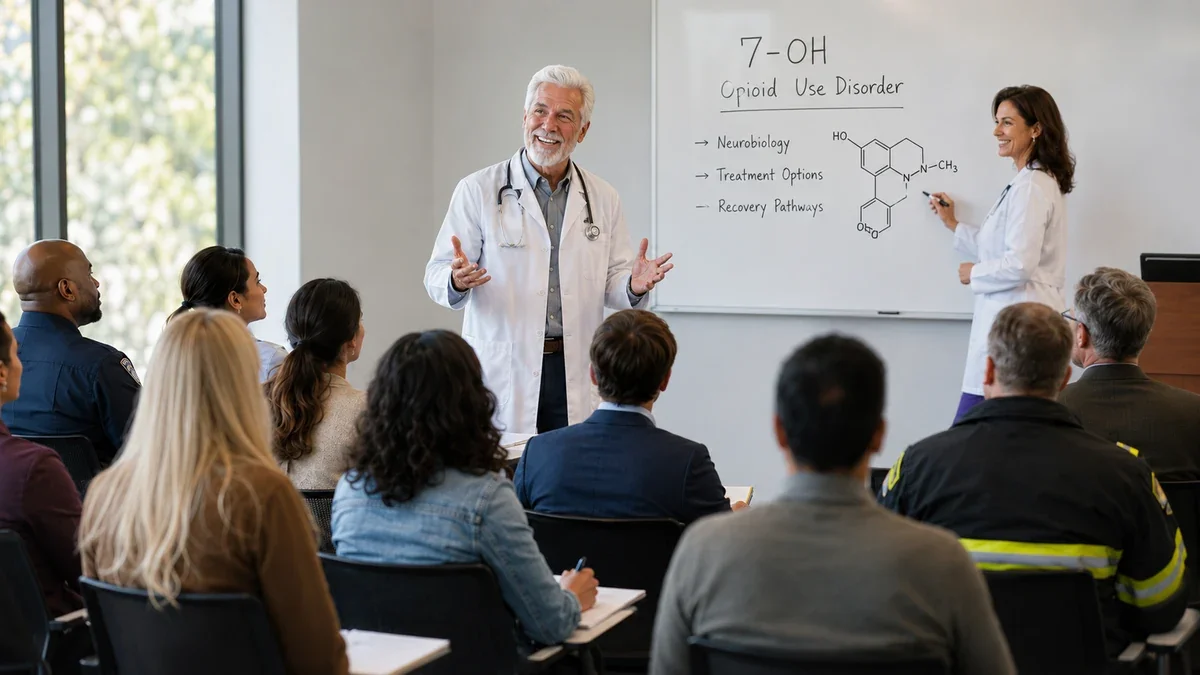
Understand Substance Use. Recognize When Help Is Needed. Learn How to Respond.
Substance use disorders are complicated. The substances involved continue to change, treatment information is often misunderstood, and the people trying to help may receive conflicting advice about what to say or do next.
Recover Clarity develops practical online addiction education courses for individuals, loved ones, behavioral-health professionals, first responders, healthcare organizations, and community groups.
Our courses connect current research with psychology, treatment experience, and real-world perspectives. Complicated information is presented in clear, understandable language without minimizing the seriousness of addiction or stigmatizing the people affected by it.
Whether you are trying to understand your own substance use, support someone you care about, respond professionally during a crisis, or guide someone toward treatment, Recover Clarity Education is designed to help you make more informed decisions.
Now Available
7-OH, MGM-15, and MGM-16
Understanding the Products, Dependence, Treatment, and Recovery
Concentrated 7-OH products and newer compounds such as MGM-15 and MGM-16 have created a rapidly changing and frequently misunderstood substance use concern. And as of July 6th, 2026 there is a potential for 7-OH, MGM-15, and Kratom Law Changes.
Some people encounter these products while seeking energy, pain relief, relaxation, improved mood, or an alternative to traditional opioids. Others purchase them as kratom products without understanding how significantly concentrated tablets, shots, gummies, and chemically modified compounds may differ from traditional botanical kratom.
This self-paced course helps learners understand what these products are, how opioid-like dependence can develop, how to recognize withdrawal and increasing tolerance, and how different treatment approaches may be considered.
The course contains seven comprehensive chapters, practical worksheets, treatment-comparison information, recovery-planning exercises, and selected references at the end of each chapter. The information in the chapter is not only based on the available research but also informed by professionals in the field and patient treatment outcomes.
It is intended for individuals using these products that are in need of 7-OH Addiction Treatment, concerned family members, counselors, therapists, peer recovery specialists, medical professionals, first responders, educators, and anyone seeking a clearer understanding of this emerging issue.
First Responder Training
Understanding Opioid Use Disorder and Guiding People Toward Treatment
First responders frequently encounter people during overdose, withdrawal, intoxication, family conflict, behavioral-health crises, and other moments of instability.
Resolving the immediate emergency is essential, but the person and family may still be left without a clear understanding of what should happen next.
This planned course will help first responders better understand opioid use disorder, medications used in treatment, common barriers to accepting help, and the different levels of addiction care that may be available.
The course will focus on practical treatment navigation rather than asking first responders to become addiction clinicians. Learners will examine how to communicate without unnecessary stigma, recognize when someone may be receptive to help, explain treatment options accurately, and connect individuals with medical, behavioral, peer, and community resources.
Topics are expected to include overdose response, naloxone, withdrawal, buprenorphine, methadone, outpatient treatment, residential care, telehealth, warm handoffs, and communication with family members.
The course is being developed for emergency medical personnel, firefighters, law enforcement officers, correctional professionals, crisis responders, community paramedicine programs, and other organizations that regularly encounter opioid use disorder.
Helping a Loved One Move Toward Substance Use Treatment
Understanding Readiness, Communication, Boundaries, and the Stages of Change
Recognizing that someone may have a substance use disorder does not automatically tell a family member what to say or do.
Loved ones may alternate between pleading, confronting, rescuing, monitoring, threatening, withdrawing, and trying to arrange treatment without the person’s cooperation. These actions often come from fear and love, but they can leave everyone involved exhausted and uncertain.
This planned course will explain how readiness for recovery develops through the Transtheoretical Model, commonly called the Stages of Change.
Learners will examine precontemplation, contemplation, preparation, action, maintenance, and the process of moving back through earlier stages after a setback or return to use.
The course will also explore an important part of recovery that is often overlooked: loved ones go through their own process of change.
Family members may need to change how they communicate, how they respond to crises, what they consider helpful, when they provide assistance, when they step back, and which boundaries they are prepared to maintain.
The objective will be to help loved ones match their response to the person’s current level of readiness rather than repeating the same confrontation regardless of the situation. The course will also distinguish supporting recovery from attempting to control another person’s recovery.
Education Informed by Experience and Psychology
Recover Clarity’s educational courses are led by Ben Culler, who has more than 20 years of experience working with people affected by substance use disorders.
His background includes graduate degrees in cognitive behavioral psychology and forensic psychology with a specialization in substance use disorders. Other degrees held in education, criminal justice, business, and experience addressing substance use within forensic and behavioral-health settings, and previous experience as a professor of psychology.
This combination brings together direct professional experience, psychological theory, and higher-education teaching experience. It also supports the development of courses that move logically from foundational concepts to practical application.
Complex subjects such as opioid receptors, reinforcement, dependence, readiness for change, treatment engagement, and recovery planning are explained in language that can be understood without an advanced clinical background. Click here to Learn More About Recover Clarity.
From Education to Public Conversation
Recover Clarity’s educational resources are informed by real treatment experience, psychology and the questions patients, families and professionals are asking as addiction and the substance-use landscape continue to evolve.
Those same topics have also become part of broader public conversations through podcast interviews, documentary projects and media coverage involving founder Ben Culler and Recover Clarity.
Developed Through Multiple Perspectives

Substance use disorders affect more than one part of a person’s life, and no single professional viewpoint fully captures the experience. As well as treatment is never a one size fits all model, which is why it takes a team of individuals to have high quality care.
Recover Clarity courses are developed with input from physicians, therapists, behavioral-health professionals, and people who have personally experienced substance use treatment and recovery.
This collaborative approach allows course development to consider:
Medical and withdrawal concerns
Psychological and behavioral processes
Treatment-provider experiences
Family and relationship dynamics
Barriers to entering treatment
The practical realities of maintaining recovery
Questions that may not be adequately addressed in brief clinical resources
Scientific research, clinical observations, professional experience, and lived experience each provide different forms of information. Recover Clarity courses identify those distinctions rather than presenting every type of evidence as equally established.
How Recover Clarity Courses Are Developed
Course development begins with a structured review of relevant scientific, clinical, governmental, and professional sources.
The information is then evaluated alongside direct substance use disorder experience, treatment-provider perspectives, and feedback from individuals who have experienced addiction and recovery.
Course material is organized using principles drawn from psychology and higher education. Learners begin with foundational information before moving into more complicated topics, practical decision-making, and real-world application.
Recover Clarity courses may include:
Structured chapters
Short and manageable course pages
Plain-language explanations
Learning objectives
Practical examples
Guided self-reflection
Worksheets and planning exercises
Treatment-navigation information
Safety considerations
Selected references
Links to additional Recover Clarity resources
When evidence is limited or still emerging, that limitation is identified. Preclinical research, published human evidence, clinical observations, and lived experiences are not treated as though they provide the same level of certainty.
Education for Organizations and Community Groups
Recover Clarity may provide group course access, educational partnerships, and customized training for organizations.
Potential audiences include:
Behavioral-health programs
First responder agencies
Healthcare organizations
Community groups
Colleges and universities
Employers
Recovery organizations
Social-service agencies
Correctional and reentry programs
Organizations interested in group access or customized education can contact Recover Clarity to discuss their needs.
Education and Treatment Serve Different Purposes
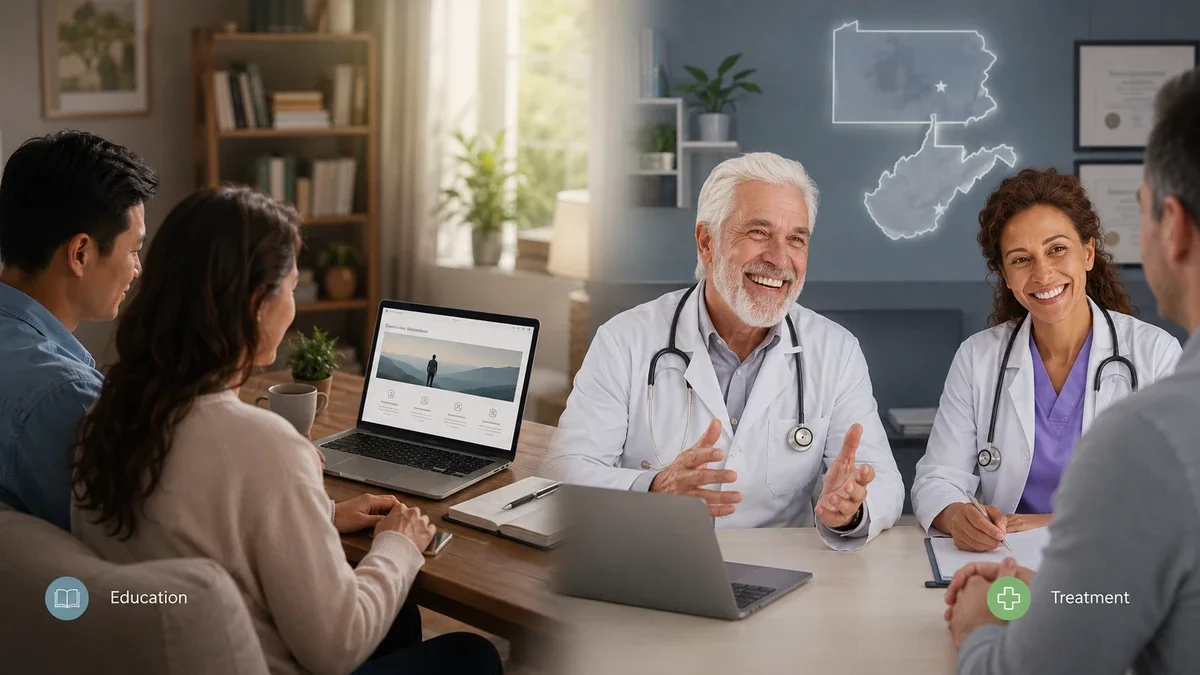
Recover Clarity’s courses provide general education to anyone wishing to learn, regardless of their location in the world. They do not diagnose a substance use disorder, establish a clinician-patient relationship, provide individualized medical advice, or replace appropriate treatment.
Individuals seeking help with opioid use disorder, kratom addiction treatment, concentrated 7-OH use, or MGM-15 use can learn about Recover Clarity’s clinical services separately.
Recover Clarity provides treatment for eligible patients who are physically located in Pennsylvania or West Virginia at the time of their appointments. Clinical eligibility and service availability must be confirmed individually.
Frequently Asked Questions
-
Yes. Recover Clarity courses are designed for self-paced online learning. Access instructions, estimated completion time, and course requirements are listed on each individual course page.
-
The 7-OH, MGM-15, and MGM-16 course is currently available. It examines the products, dependence, withdrawal, treatment options, supported reduction, and long-term recovery planning. More courses are coming soon.
-
No. Courses are written in understandable language. Some courses are especially relevant to professionals, but the required background will be identified on the individual course page.
-
Continuing-education or professional credit should not be assumed unless it is specifically stated on the individual course page.
-
Group access and organizational training may be available. Contact Recover Clarity to discuss the number of learners, intended audience, and training goals.
-
Join the Recover Clarity education mailing list and select the subjects that interest you. Updates will be provided as new courses and training opportunities become available.